

 Tiếng Việt
Explore with Thomore
What Is Niche Perfume? The Rise of the Independent House

Jun
Niche perfume describes the operating model of specialised, independent fragrance houses, where the creative process is built around artistry, individuality and the perfumer’s freedom of expression. Unlike designer fragrance — tied to luxury fashion labels and shaped by mass appeal — niche perfume was never made to chase the majority. It exists for people looking for a personal signature and an olfactory experience that belongs to them alone.
Quick Summary
- What it really is: Niche and designer are two different creative models, not a scale for ranking quality.
- Core characteristic: Niche houses focus on creative freedom and an independent fragrance identity, rather than being steered by mass taste.
- Real-world performance: Longevity has nothing to do with whether a bottle is niche or designer — it is decided by the physical chemistry of the formula.
- In practice: The rise of niche reflects how much more personalised modern buyers want to be. Not everyone needs a niche perfume.
I. Is Niche Actually More Premium Than Designer?
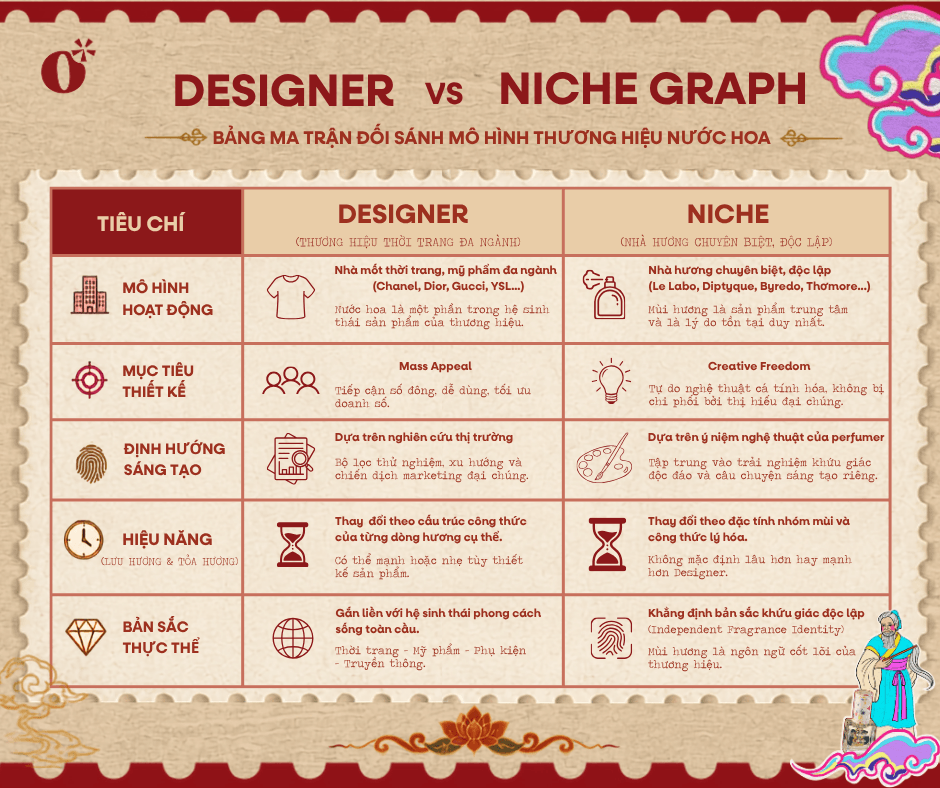
In the fragrance industry, the terms “niche” and “designer” describe a brand’s operating model and creative direction. They are not quality grades.
Designer houses are usually multi-category fashion or beauty brands — Chanel, Dior, Hermès, Gucci. Perfume is one part of a global lifestyle ecosystem, and it is built to reach a wide audience, be easy to wear and optimise sales. That is what the industry means by mass appeal.
Niche perfumery, by contrast, describes the perfume-focused house: scent is the central product and the brand’s whole reason to exist. This model prizes creative freedom and the ability to build an independent fragrance identity.
What actually decides the quality of a fragrance comes down to four things:
- The blend itself: the physical and chemical balance between the notes.
- The perfumer’s talent: how they think about structure, and the artistic idea behind the composition.
- Material quality: how naturals and high-grade synthetics are sourced and handled.
- Fit with your body: how the formula interacts with your own skin chemistry.
So niche is not automatically better or more premium than designer. The two simply represent different creative philosophies within the global fragrance industry.
II. Why Did Niche Become the Trend After the Designer Era?

The growth of independent fragrance was not an accident. It is the predictable result of a shift in buying psychology that has been building for decades, across three stages of awareness:
The 1980s to 2000 — the age of mass appeal: people looked for large fashion houses with strong recognition, scents that were easy to wear in any situation and felt socially safe.
2000 to 2010 — the signature scent: taste moved on. A pleasant, clean smell was no longer the point; people wanted their scent to leave a personal mark that others would remember them by.
2010 to today — the rise of independent identity: once the popular formulas became too familiar and too easily duplicated, buyers started looking for personalisation, individual identity, an artistic experience and a creative philosophy that matched how they see themselves and the world around them.
III. Three Common Myths About Niche Perfume
Myth 1: Niche always uses rarer, more natural materials
Not true. Modern niche houses work with both natural raw materials and high-purity synthetic aroma molecules, to IFRA standards. Their aim is not to reject anything synthetic — it is to build unusual scent architectures, such as damp mist, metal or wax, in service of an artistic idea.
Myth 2: Niche always lasts longer
Not true. Longevity depends on the substantivity of the aroma molecules in the formula — how well they cling. A citrus niche scent will still evaporate faster than an amber designer one.
Myth 3: Niche is always more expensive
Not true. Price comes from production scale, R&D costs and each house’s distribution strategy — not from the label attached to the brand.
IV. Not Everyone Needs a Niche Perfume
Niche is not a compulsory destination for anyone who loves fragrance. Which model suits you depends entirely on where you wear it and what you want from it:
Designer suits you if: you want something tidy and polite for everyday wear; you need to stay safe and comfortable in an enclosed office; or you are looking for a gift that is easy for anyone to appreciate.
Niche suits you if: you treat scent as part of how you state who you are; you enjoy exploring high-contrast scent structures; and you want the perfumer’s independent artistic point of view, undiluted.
V. Thơmore and the Independent Model in Vietnam
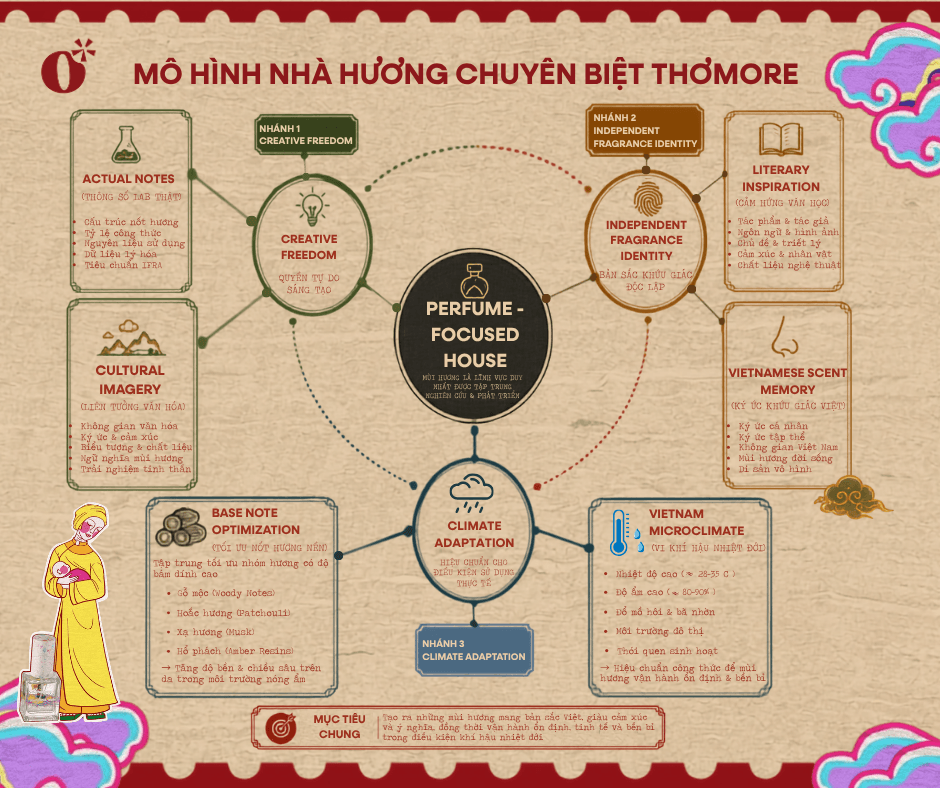
We have chosen to run as a perfume-focused house — meaning scent is the only field we research and develop in.
Creative freedom drawn from local culture
One of the defining features of a perfume-focused house is creative freedom. It lets the perfumer pursue an artistic idea, or a piece of cultural material, without having to bend it back towards a popular formula.
At Thơmore, that inspiration usually comes from literature, collective memory and the everyday cultural spaces of Vietnamese life. Every composition is built on two parallel layers:
- Actual notes: the real notes and technical parameters of the formula.
- Cultural imagery: the cultural associations, literary heritage, memories and emotional spaces a scent can open up.
Keeping those two layers apart lets the experience stay technically transparent while holding on to emotional depth and a meaning that lasts in the mind of the person wearing it.
Calibrating the formula for the conditions it will actually live in
Beyond the artistic side, building a formula also has to account for the environment it will be worn in day to day.
Vietnam’s hot, humid climate creates conditions quite unlike the temperate Western markets where most modern fragrance literature and trends were formed. So we pay particular attention to how a scent actually behaves in local conditions — from the way the layers move across skin at high temperatures, to how well the base notes hold up in heat and humidity. If you live anywhere tropical or subtropical, this is the part of a fragrance’s design that tends to matter most to you and gets discussed least.
This is not an attempt to make scents louder or more attention-seeking. What we care about is whether a fragrance keeps its balance, its depth and its originality once it enters ordinary Vietnamese daily life.
VI. Frequently Asked Questions
1. What is niche perfume?
Niche perfume is the term for fragrances made by specialised, independent houses. The creative process puts artistry, individuality and the perfumer’s freedom of expression first, rather than chasing mass taste the way designer lines do.
2. Why has niche perfume grown so strongly over the past 15 years?
Because of a shift in global buying psychology. After a long stretch of wearing the easily recognised designer formulas, modern buyers tend to go looking for a distinct scent signature that asserts who they are.
3. Does niche perfume last longer than designer?
Not by default. Longevity depends on the molecular structure of the notes in the formula — woods and ambers cling to skin longer than citrus does, whether the bottle is niche or designer.
4. Why does niche perfume often use synthetic materials?
To widen the perfumer’s creative range — to make scents that do not exist in nature, such as damp mist or metal — while keeping skin safety within the global IFRA standard.
This article is for reference. Your real experience of a scent can change with your skin, the environment you wear it in and how you personally perceive it.
About Thơmore
Thơmore is a Vietnamese perfume house inspired by literature, building scents that carry memory, feeling and the cultural materials of everyday Vietnamese life.
Explore more at: thomore.vn
 Tiếp tục với Zalo