

 Tiếng Việt
Explore with Thomore
What Is Perfume Made Of? The Ingredients Behind a Scent
Jul
What is perfume made of? Have you ever wondered what creates the seductive, distinctive scent in each bottle? In this article, Thomore explores the main ingredients of perfume, how it’s classified by oil ratio, and the things you shouldn’t overlook when choosing a fragrance.
Quick Summary
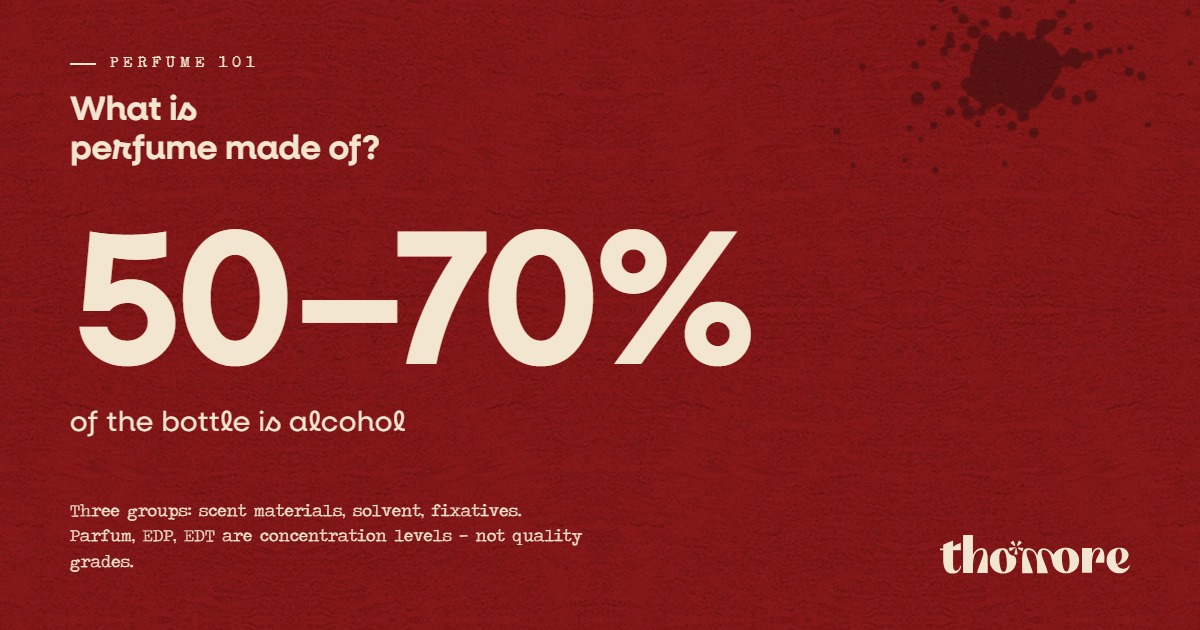
- Perfume has three groups of ingredients: the scent (natural essential oils and/or synthetic aroma materials), the solvent (mostly alcohol, typically 50–70%), and fixatives that help the scent last longer.
- Parfum, EDP, EDT, EDC are CONCENTRATION levels, not quality grades. They tell you the ratio of scent material in the solution, not whether the formula or the ingredients are good or bad.
- Higher concentration usually lasts longer, but doesn’t decide everything. Longevity also depends on how well each scent molecule clings and on the structure of the formula.
- Ingredient labels are about to change: from 31 July 2026, perfumes placed on the EU market must list up to 82 potentially allergenic fragrance substances separately, instead of 26 as before.
What is perfume made of? – The main ingredients in perfume
What is perfume? It’s a product made to give a pleasant scent to the body, clothing or the space around you. It’s blended from a combination of aromatic oils, a solvent and scent-holding compounds. More than a beauty product, perfume expresses the wearer’s personality, mood and style.
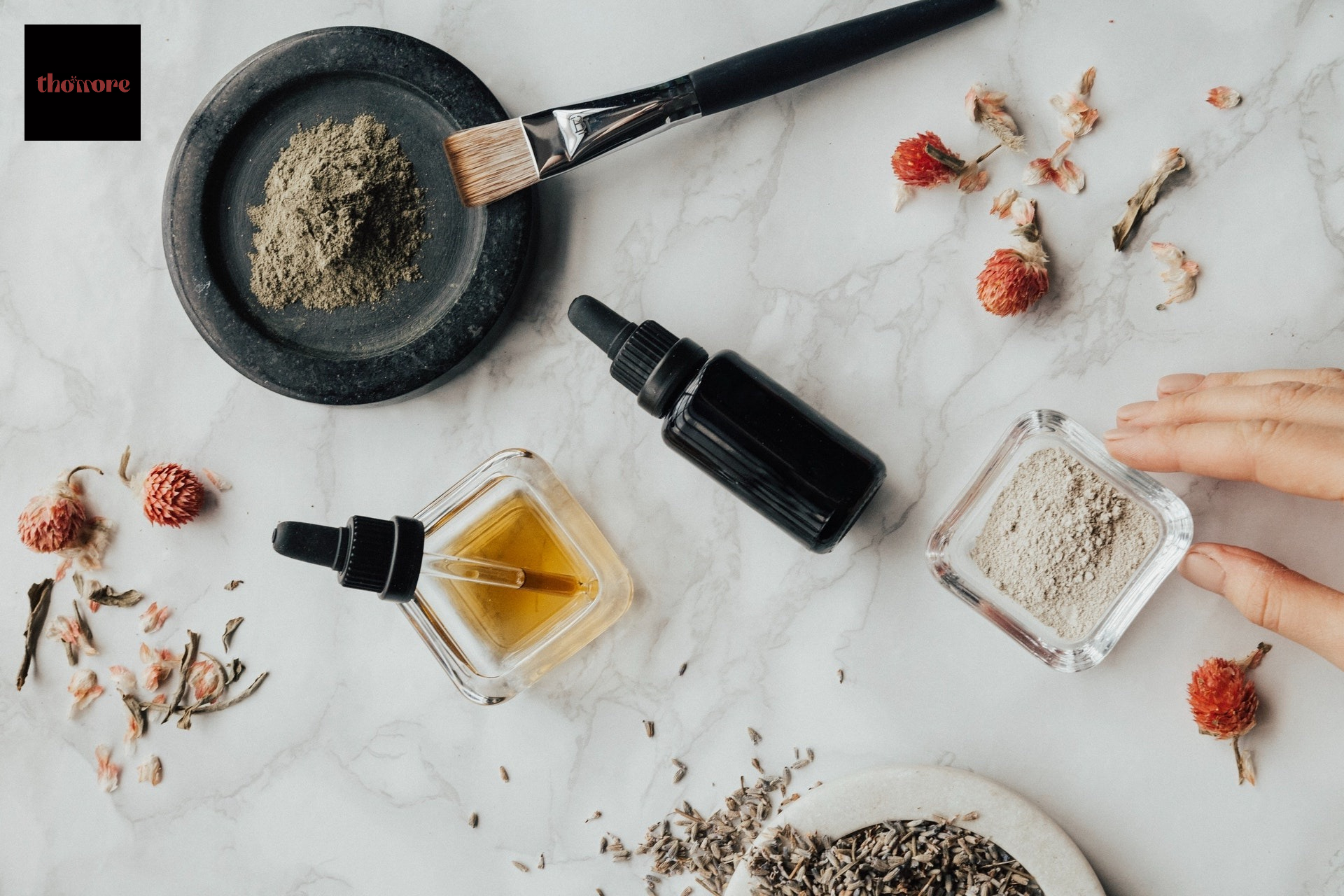
The ingredients in perfume usually include: aromatic oils, carrier oils, alcohol, water, musk, amber, vanilla and a few other solvents, as follows.
1. Aromatic oils
Essential oils are the key component that gives each perfume its signature scent. They can be extracted from flowers, leaves, bark, roots or other parts of plants through methods such as distillation or cold pressing. Depending on the raw material, the oil will have a different scent and intensity.
2. Alcohol
Alcohol is the main solvent that dilutes the oils and helps the scent spread more widely on application. It typically makes up 50% to 70% of a perfume. Beyond diffusing the scent, alcohol also preserves the perfume, guards against bacteria and dries quickly on the skin.
3. Carrier oils
Carrier oils soften the scent, protect the skin and keep the essential oils from evaporating too fast. They’re usually pressed from nuts or fruits — coconut oil, jojoba oil, almond oil and so on. Thanks to their mildness and moisturising quality, carrier oils are often added to give a smoother feel on application.
4. Water
Though it makes up only a small share, water is an important ingredient that balances the solution. Purified, mineral-free water is used to avoid altering the scent.
5. Amber
Amber carries a warm, lightly sweet scent with a hint of woody smoke — usually placed in the base notes to add depth. It’s a common component in the Oriental fragrance family.
6. Musk
This is a fixative able to hold a scent on the skin for a long time. Natural musk is highly valued and lends a warm, mysterious, luxurious feel. Today, most perfumes use synthetic musk instead.
7. Vanilla
Vanilla not only makes a scent softer and more comforting but also clings well. It brings a warm, feminine feel and is often used in premium fragrances.
8. Solvents
A solvent binds the components together, ensuring the perfume doesn’t separate or discolour. Some solvents also help the scent last longer and improve the product’s texture.
Classifying perfume by oil ratio
| Type | Scent-material ratio | Wearing characteristics |
|---|---|---|
| Extrait de Parfum (Parfum) | 22 – 40% | Most concentrated, close diffusion, for formal occasions |
| Eau de Parfum (EDP) | 15 – 20% | Balances richness and longevity, fine for daily wear |
| Eau de Toilette (EDT) | 5 – 15% | Lighter and airier, suits hot, humid climates |
| Eau de Cologne (EDC) | 2 – 5% | Fresh, needs reapplying through the day |
| Eau Fraîche | under 3% | Lightest, almost a passing veil of scent |
As you learn about perfume, you’ll notice the scent comes not only from the raw materials but also, in large part, from the oil ratio in the product. This is what directly affects how strong or light the scent is, and how long it lasts on skin or clothing.
Based on the aromatic-oil content in the formula, perfume today is divided into five main groups:
1. Extrait de Parfum (Parfum/Extract): 22–40% oils
- The highest oil concentration on the market, usually 22% to over 40%, giving 10 to 24 hours of wear — and even into the next day on clothing.
- Because it’s so concentrated, Parfum needs only a tiny amount. It suits cold weather, enclosed spaces or elegant evening events.
2. Eau de Parfum (EDP): 15–20% oils
- A popular choice among premium perfumes, with oils of 15% to 20%.
- Average wear of 6 to 12 hours, fine for both work and parties.
- EDP gives a clear, lasting scent yet stays light enough for daily wear.
3. Eau de Toilette (EDT): 5–15% oils
- EDT has around 5–15% oils, lighter than EDP, ideal for anyone who likes a soft, fresh scent.
- Wear of 3 to 6 hours, ideal for daytime or summer.
4. Eau de Cologne (EDC): 2–5% oils
- With just 2–5% oils, EDC is a light perfume with an airy, easy scent.
- Wear of about 1–3 hours, great after a shower, after exercise or in hot, humid weather.
5. Eau Fraîche: under 3% oils
- The lowest oil concentration, under 3%, mostly water with a little alcohol.
- Wear of only about 1–2 hours, but very gentle and friendly to sensitive skin.
Thomore’s basic perfume production process
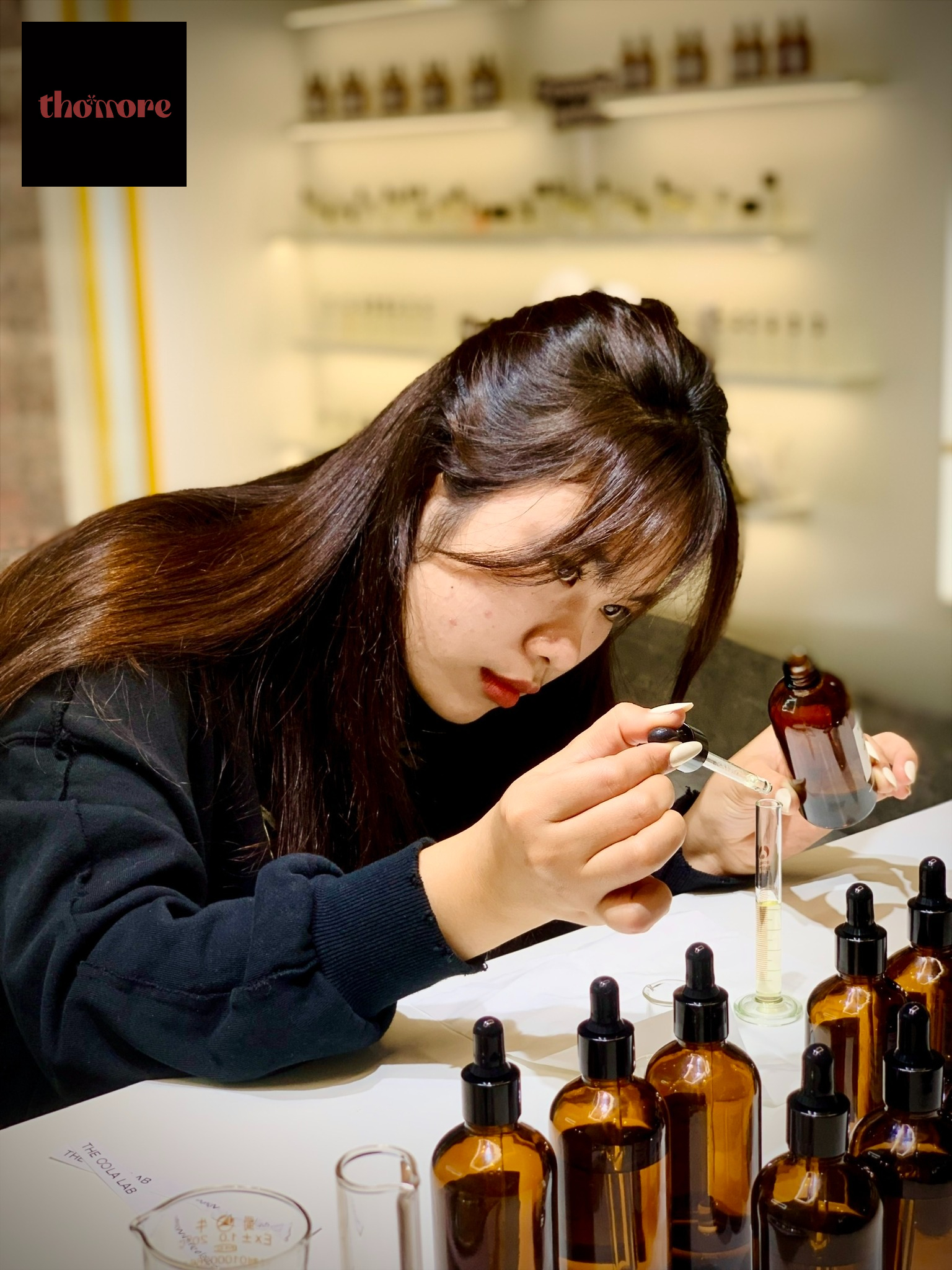
If you’re curious how premium perfume is made, Thomore’s production process shows how the art of scent-making meets modern technique. To create a refined perfume, Thomore follows a process of four main stages:
- Choosing and shaping the scent
Every Thomore fragrance starts by defining its scent style. From natural inspiration to a contemporary character, our team studies carefully to select the right natural or synthetic materials.
- Extracting the oils
Once selected, the materials go through extraction by methods such as steam distillation, cold pressing or solvent extraction. Thomore focuses on preserving the essence intact, ensuring pure, long-lasting oils.
- Blending and maturing
The oils are blended to a proprietary formula to create a harmonious scent with depth and character. After blending, the mixture is matured under the right temperature and humidity so the scent stabilises and diffuses better.
- Aging
Finally, the perfume enters the aging stage — “resting” for a set period so the components meld completely. This is the last fine-tuning before bottling, making the scent softer, more seductive and longer-lasting on the skin.
What to keep in mind about perfume ingredients
The ingredients are the “soul” of every perfume, deciding the scent, the longevity and even how it makes you feel. To choose the right product, pay attention to these points:
- Origin of the materials: Perfume ingredients can be extracted from nature or made synthetically in a lab. Natural materials often feel soft and deep, while synthetic aroma materials offer stability and long-lasting wear.
- Purity: Premium perfumes prize the purity of their materials. The fewer the impurities, the clearer and cleaner the scent.
- Safety: Some ingredients may irritate or cause allergies on sensitive skin. Favour perfumes with transparent ingredient disclosure and no banned or harmful substances.
- Susceptibility to change: Ingredients are easily affected by light and heat. If a material is unstable, the scent can shift over time.
- Blend ratio: Each ingredient is calibrated to its own formula to harmonise the note layers. Even a small imbalance can distort the whole scent.
Understanding what perfume is made of is the first step to choosing one that suits your personality and needs. Once you grasp the composition, the oil ratio and the production process, it becomes far easier to judge quality, keep your skin safe and leave your own signature trail every time you appear.
How are perfume ingredients regulated?
Scent materials aren’t beyond oversight. There are two layers of regulation any serious maker has to follow.
IFRA Standards — the industry’s rulebook
The International Fragrance Association (IFRA) issues the IFRA Standards, which specify which materials are banned, restricted in concentration, or required to meet certain technical criteria. The Standards are amended periodically; the 51st Amendment was notified on 30 June 2023.
The EU allergen labelling change — the 31 July 2026 deadline
Regulation (EU) 2023/1545, published on 26 July 2023, amends the Cosmetics Regulation 1223/2009 and expands the list of potentially allergenic fragrance substances that must be declared separately on the label: from 26 up to 82, adding 56 substances identified by the Scientific Committee on Consumer Safety (SCCS).
Two key dates:
- Products placed on the EU market after 31 July 2026 must follow the new labelling.
- Products already on shelves before then may be sold through to 31 July 2028.
What does this mean for you as a buyer? Ingredient labels on imported bottles will get noticeably longer over the next few years. A longer list does not mean the product contains more chemicals or is less safe — the formula is unchanged; substances that were always there are simply being disclosed in more detail. For anyone with sensitive skin, it’s a helpful change: you know exactly what you’re being exposed to.
Frequently Asked Questions (FAQ)
1. Does perfume have to contain alcohol?
It doesn’t have to, but most spray perfumes use alcohol as the solvent because it dissolves scent materials well, helps the fragrance diffuse when sprayed and evaporates quickly on skin. Alcohol-free oil-based perfumes exist too; in exchange, their scent diffuses closer to the skin and clings more tightly.
2. Is natural perfume better than one using synthetic aroma materials?
There’s no blanket answer. Natural and synthetic materials are both assessed for safety under the same IFRA Standards, and many of the allergens that now have to be labelled are components naturally present in essential oils. Synthetic materials also make it possible to recreate scents that can’t be extracted, or to replace materials from threatened species.
3. Why do two perfumes at the same EDP concentration last for different lengths of time?
Because concentration only tells you the ratio of scent material in the solution, not which molecules those are. How well they cling to skin varies between material families, so it’s the structure of the formula that decides longevity.
4. Is a longer ingredient list a sign of a less safe product?
No. From 31 July 2026, EU rules require 82 potentially allergenic fragrance substances to be declared separately instead of 26, so the label will be longer for the very same formula. It’s a change in disclosure, not in ingredients.
 Tiếp tục với Zalo