

 Tiếng Việt
Explore with Thomore
Does Perfume Contain Alcohol? What the Alcohol Actually Does
Jun
You have probably held a bottle of perfume and wondered: does perfume contain alcohol? It does — alcohol is in almost every spray fragrance on the market, and it plays a real part in how a scent diffuses and holds. If the smell of alcohol has ever put you off, let Thơmore walk you through why it matters so much, and how to take the sharpness out of it.
Quick Summary
- Yes — most spray perfumes contain alcohol, usually around 50–70% of the liquid. It is there on purpose. It is not filler.
- Alcohol does three jobs: it dissolves the aromatic materials, it throws the scent outwards when you spray, and it evaporates quickly to leave the fragrance sitting on your skin.
- The sharp alcohol smell on first spray is normal and disappears within about half a minute, once the alcohol has flashed off. It is not a sign of a poor-quality perfume.
- Alcohol-free options do exist: oil-based perfumes. The trade-off is that they sit close to the skin rather than projecting outwards.
Does perfume contain alcohol?
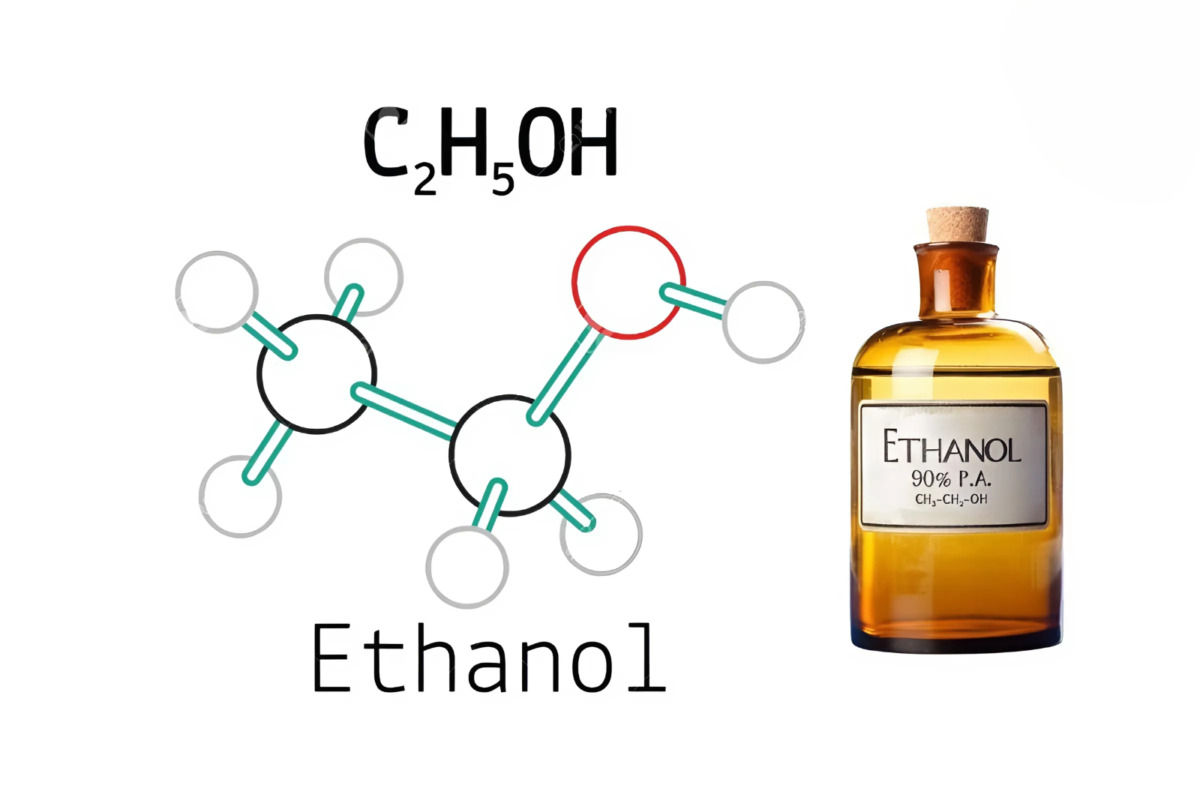
Most perfumes made today do contain alcohol — specifically ethanol. It is a fast-evaporating liquid that helps the scent diffuse properly once it hits your skin.
The concentration varies by product type. The alcohol used in perfumery generally runs between 70 and 95 proof — strong enough to evaporate quickly, still safe on skin. Broadly:
- Eau de Cologne: very high alcohol content, light scent, fades fast.
- Eau de Toilette and Eau de Parfum: roughly 70–85% alcohol; longer-lasting and the most common formats.
- Extrait de Parfum (high oil concentration): little or no alcohol, which suits sensitive skin.
Why is there alcohol in perfume?
Alcohol is not added purely to carry the scent. It also shapes the texture of the liquid and how the product feels to use:
- It keeps the aromatic oils fluid rather than thick, so they can be decanted into an atomiser and sprayed cleanly.
- Compared with neat oil, which is sticky and dense, an alcohol-based perfume dries fast on skin and feels clean and comfortable.
- It underpins the categories themselves — Eau de Toilette, Eau de Parfum, Cologne — each with a different strength and wear time.
- It gives each line its own character: some read cool and airy, others deep and settled, depending on how the scent spreads and evaporates.
- >>> Browse Thơmore’s perfumes
What alcohol does in perfume
It surprises a lot of people that nearly all perfume contains alcohol, and that it is far from an inert ingredient. What alcohol actually does in a fragrance is not widely understood, even though it is central to making a finished perfume work.
1. It keeps the product clean and stable
Alcohol is strongly antimicrobial, which stops a perfume becoming contaminated in use and storage. That is why a bottle does not spoil even long after it has been opened.
2. It carries the scent out, fast and far
Because alcohol evaporates quickly, spraying it onto skin lifts the aroma molecules with it and spreads them through the air — that burst of scent in the first few seconds.
3. It helps the scent hold on skin
As the alcohol flashes off it leaves the fragrance sitting dry and comfortable on skin. This works particularly well for lower-oil formats such as Eau de Toilette.
4. It protects the composition itself
Alcohol helps shield the aromatic compounds from oxidation and from changes caused by their surroundings, so the perfume keeps its original layers and character.
5. It gives the perfume its texture and comfort
Without alcohol, perfume would behave like a thick oil — greasy and uncomfortable on skin. Alcohol makes it dry quickly and feel light and breathable after spraying.
How to reduce the alcohol smell when wearing perfume
Some people find that first alcoholic hit unpleasant, especially in higher-alcohol formats. It is completely normal, and easy to soften:
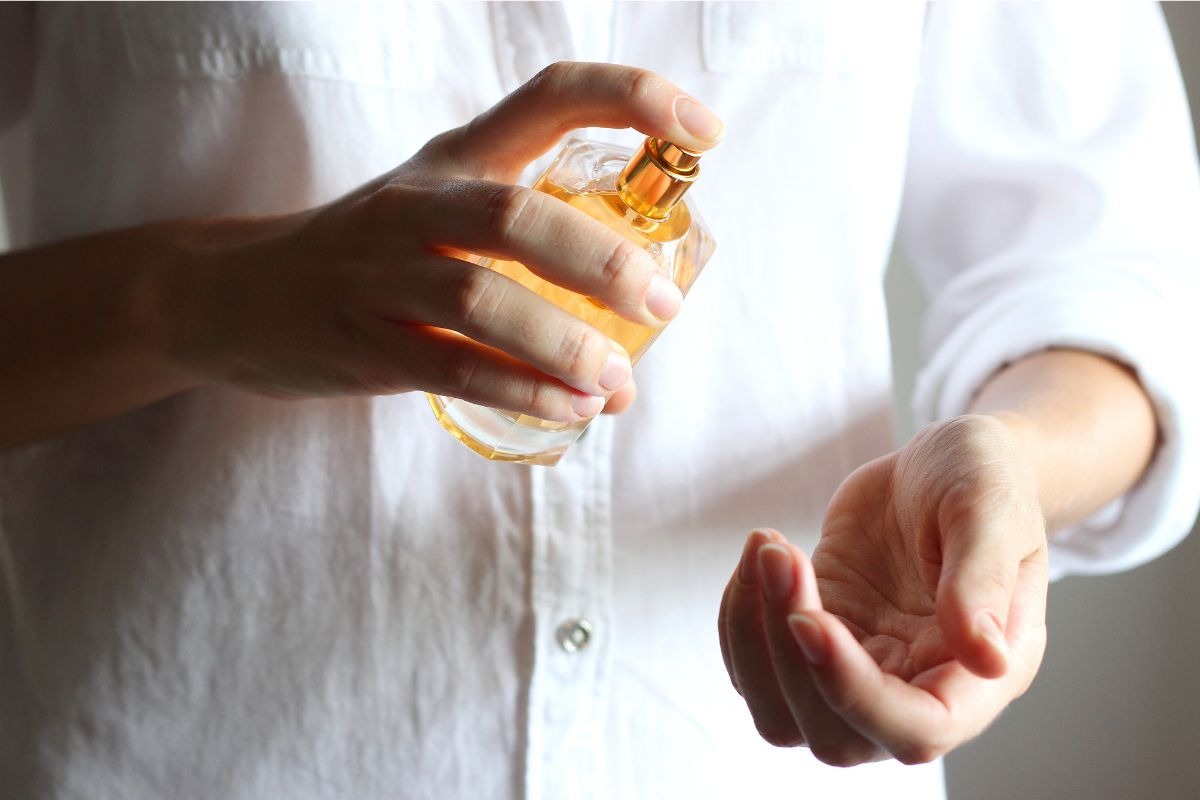
- Spray from 15–20cm away: the distance gives the alcohol room to evaporate before it reaches your skin, which takes the edge off.
- Spray onto clothing instead of skin: some fabrics hold scent well without the alcohol note that skin picks up. Test a small area first, in case of staining.
- Wait a few seconds before you smell it: give it 15–30 seconds for the alcohol to lift, and you will get the perfume’s real character.
- Avoid spraying very dry skin: dry skin can slow the alcohol’s evaporation and hold the sharpness longer. Moisturise the area with an unscented cream first.
- Choose a higher oil concentration: Eau de Parfum (EDP) and Extrait de Parfum carry more oil and less alcohol, so there is less of that opening sharpness.
Does Thơmore perfume contain alcohol?
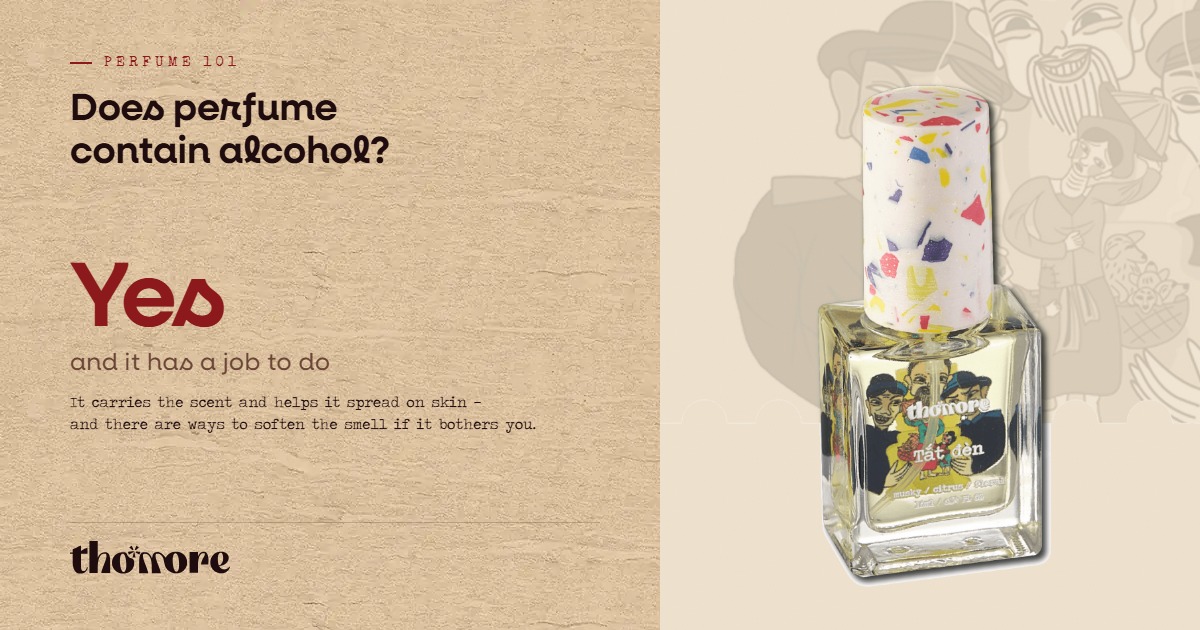
Yes. That is entirely normal: Thơmore perfumes are Eau de Parfum, and our signature releases — Thu Điếu (named after Nguyễn Khuyến’s autumn-fishing poem), Kiều (after Nguyễn Du’s Tale of Kiều) and Đây Thôn Vĩ Dạ (after Hàn Mặc Tử’s poem) — all use ethanol to dissolve the aromatic oils and help the scent carry once sprayed. Alcohol does more than spread the fragrance and dry quickly on skin; it also contributes to how long the scent holds. Its presence is nothing to worry about. It is part of what makes the experience of wearing a Thơmore perfume complete.
So now you know whether perfume contains alcohol, and why it is used so widely. Rather than worrying when you spot it on an ingredients list, you can take it as one of the things helping the scent project, hold and feel good to wear.
Alcohol-based versus oil-based perfume
Neither is absolutely better than the other — they serve two different needs.
| Criterion | Alcohol-based (most common) | Oil-based |
|---|---|---|
| How it projects | Spreads widely; people around you notice it | Stays close; mostly the wearer notices it |
| Feel on spraying | Cool, dries fast, brief alcohol note | Slightly moist, no alcohol note |
| Hold on skin | Moves clearly through its layers over time | Holds a long time in place, with little movement |
| Suits | Everyday wear where you want the scent to carry | Sensitive skin, and settings that call for discretion |
In a hot, humid climate like Vietnam’s, alcohol-based perfume is usually the preferred choice: it evaporates fast and does not leave anything tacky behind.
Frequently Asked Questions
1. Does the alcohol in perfume dry out your skin?
The amount of alcohol reaching your skin in a single spray is very small and evaporates almost instantly, so for most people it causes no meaningful dryness. If your skin is already sensitive, spray onto clothing or choose an oil-based fragrance.
2. Why does perfume smell harsh the moment you spray it?
That is the alcohol evaporating, not the perfume itself. Wait 30 seconds to a minute before judging it — that is when the top notes come through.
3. Does alcohol-free perfume last longer?
It usually holds longer on the spot where you applied it, but projects far less. You may still smell it on yourself while someone facing you barely registers it.
4. Should I spray perfume on clothing instead of skin?
You can, and for sensitive skin it is a good option. Bear in mind that scent on fabric moves through its layers less than it does on skin, and some colourants in perfume can mark light-coloured fabric.
 Tiếp tục với Zalo