

 Tiếng Việt
Explore with Thomore
How to Store Perfume and Decants Properly

Jun
To store perfume well, keep the bottle in a cool place away from direct sunlight and heat, close it as designed and check for leaks. A decant also needs a clear label with the fragrance, concentration and decanting date. Storage protects what is in the bottle; it does not determine how long the scent lasts on your skin.
Quick Summary
- A cupboard or the original box is usually better than a sunny shelf or a hot car.
- Keep bottles upright and check the atomiser, neck, thread or refill valve for leaks.
- There is no single shelf-life figure or compulsory storage temperature for every perfume.
- A colour change alone does not prove that a fragrance has spoiled; compare its smell and condition too.
Where should perfume be stored at home?
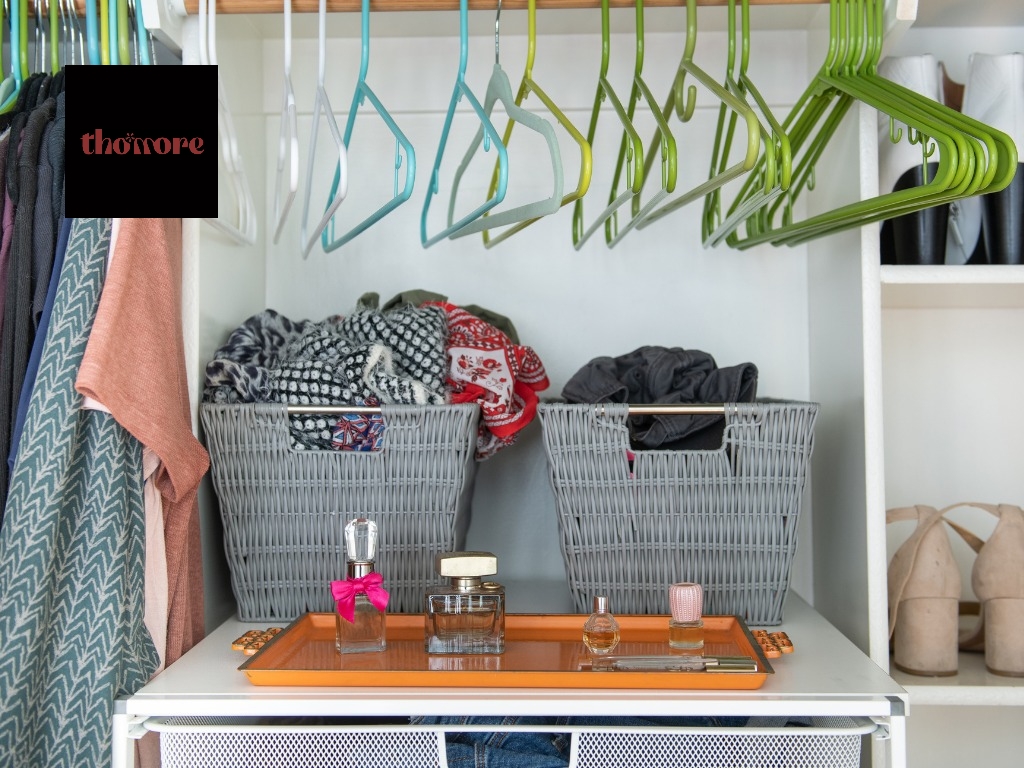
A cupboard away from a window is a practical choice. CHANEL advises keeping fragrance away from heat and light, tightly closed and in its original packaging. A box shields the bottle from light, but it cannot make a hot location suitable.
| Location | What to check | Practical arrangement |
|---|---|---|
| Drawer or wardrobe | Direct sun or nearby heat | Keep the bottle upright and protected from knocks. |
| Dressing table | Window light or a hot lamp | Use the box and move it into a cupboard if the area warms up. |
| Bathroom | Changing heat and humidity | Prefer a dry cupboard in another room. |
| Handbag or luggage | Pressed atomiser, loose cap or leaks | Protect the sprayer and inspect a travel bottle before packing. |
How do original bottles and decants differ in storage?
For an original bottle, keep the label and packaging so that the maker’s instructions remain easy to identify. Wipe the outside of the sprayer with a clean cloth when needed. A decorative cap is not always the part that seals the bottle, so inspect the atomiser and neck if liquid appears around them.
For a decant, use a container made for fragrance and label the scent, version and decanting date. Check the thread, valve and cap before putting it in a bag. Do not add water or mix an unidentified remainder with fresh perfume. See how to decant perfume at home for the transfer process.
Does perfume need a fixed temperature or a fridge?
Do not impose one exact temperature on every formula when the brand does not provide one. The useful goal is to avoid heat, direct sun and places that repeatedly warm up. Refrigeration is not required by the guidance cited here; follow the label or ask the maker before choosing special storage.
The cited sources also do not support the claim that ordinary movement or every shake “breaks” a fragrance. Concentrate on conditions you can inspect: location, closure, label, leaks and the liquid itself.
What signs should you check before using it again?
An unexpectedly different smell, leakage or unusual sediment are reasons to pause and ask the maker. Darker colour on its own does not identify the cause. The FDA notes that light, air and temperature changes can affect the colour, texture and smell of cosmetics, but this does not let anyone diagnose a bottle from one photograph.
Record when you began using the bottle and follow its own label. Read does perfume expire? for help with shelf-life markings. Bottle life and hours of wear on skin are separate questions.
Frequently Asked Questions
Should perfume be kept in a bathroom?
A dry, cool cupboard away from sunlight in another room is usually more practical. Bathrooms often change in heat and humidity while they are used.
Does a perfume decant need different storage?
A decant needs extra checks for the thread, valve and leakage, plus a clear fragrance, concentration and date label. Both original bottles and decants should avoid direct sunlight and heat.
Does a colour change mean perfume has spoiled?
Not by itself. Compare the smell, liquid condition, storage history and the maker’s instructions. Stop using it and ask the brand if anything seems abnormal.
Will good storage make perfume last longer on skin?
Good storage helps preserve the fragrance in its bottle. Wear time also depends on the formula and use conditions, so storage cannot promise a number of hours on skin.
 Tiếp tục với Zalo