
 Tiếng Việt
Explore with Thomore
10ml Perfume Decants vs Brand Bottles
Jan
A 10ml perfume decant is fragrance transferred from another bottle into a 10ml container. It differs from a 10ml bottle packed by the brand and from a sample. Decants are useful for testing or travel, but quality depends on the source bottle, transfer and storage.
Quick Summary
- 10ml is a volume; it does not prove whether a bottle is brand-made or decanted.
- A decant lowers the initial spend, but its source still needs verification.
- Compare price per ml only after matching the fragrance, version and format.
- Keep the label, check for leaks and avoid heat and direct sunlight.
Identify three small-bottle formats before buying
| Format | Who packs it? | Information you need |
|---|---|---|
| 10ml decant | A seller or owner transfers it from a source bottle | Fragrance, version, source bottle and decanting date. |
| Brand-made 10ml bottle | The brand supplies it as a product format | Label, volume, product name and official sales channel. |
| Sample | The brand supplies it through a sampling programme | Sample label and version; the volume may be less than 10ml. |
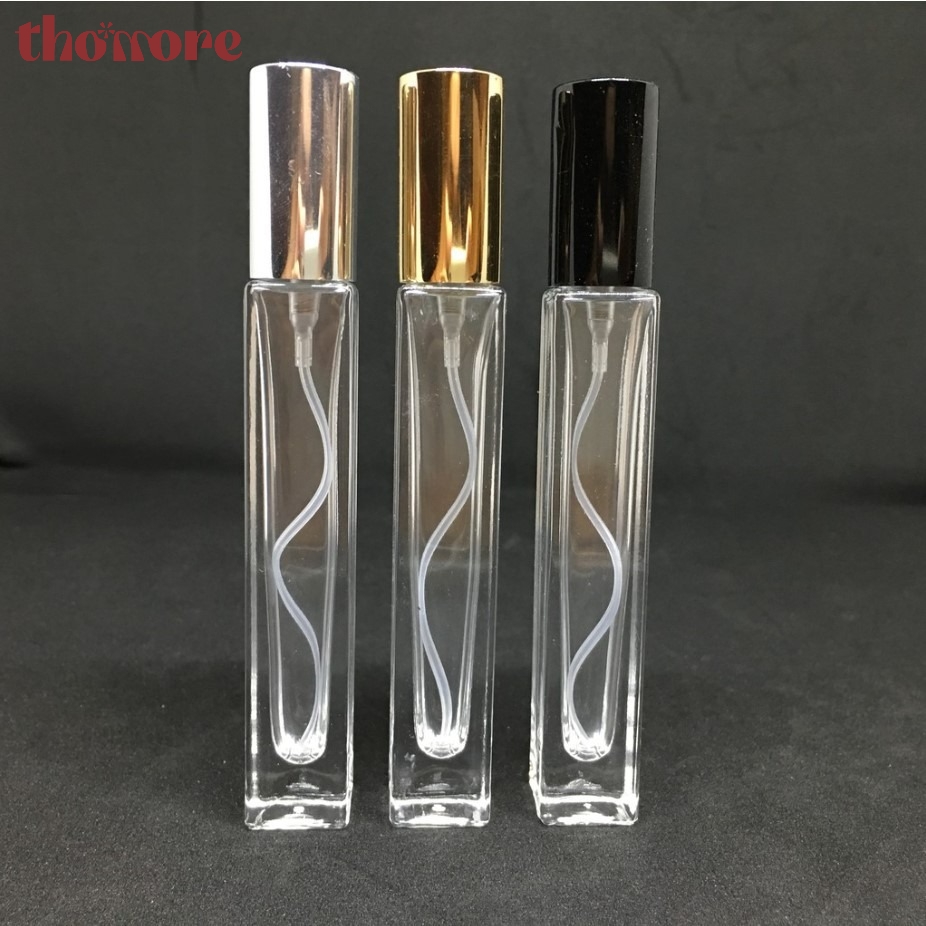
A photograph of a large bottle in a listing does not identify the small bottle you will receive. Read the description and ask directly. Attractive packaging alone does not prove that the brand packed it.
When is a 10ml decant useful?
A small format helps when you want to wear a scent in normal life before committing, rotate fragrances or avoid carrying a large bottle. Once you know you use a scent regularly, compare the total cost with an original bottle. The practical aim is to test the fragrance, rather than collect retail packaging.
How should you compare price per ml?
Use price per ml = bottle price ÷ labelled volume. Compare like with like: the same scent, version and packing format. The atomiser, packaging and service can also affect cost; price per ml does not authenticate a product.
For a concrete brand-made example checked on 21 September 2026, Thơmore listed Bánh Trôi Nước (“Floating Sweet Dumplings”, after Hồ Xuân Hương’s poem) at 289,000 VND for 10ml and 750,000 VND for 30ml. That equals 28,900 VND/ml and 25,000 VND/ml. Recheck the current product pages before buying.
How do you assess the source of a decant?
- Ask to see the source bottle and its exact version.
- Check that the label names the scent, concentration and volume.
- Ask when and how the perfume was transferred.
- Inspect the container, valve and atomiser for leakage.
- Keep the order record and read the seller’s problem-resolution policy.
There is no simple guarantee that a decant performs exactly like every brand bottle. Transfer container, storage, atomiser and use affect the experience. Treat unusually absolute claims about wear time or authenticity with care.
How should a decant be stored and carried?
Keep it upright, away from heat and direct sunlight, with the atomiser protected. Do not leave it in a hot vehicle. If it leaks, develops unusual sediment or smells unexpectedly different, stop and ask the seller. Our decanting guide covers transfer, while the shelf-life guide explains date markings.
Frequently Asked Questions
Is every 10ml perfume a decant?
No. 10ml states the volume. A 10ml bottle may be packed by the brand, transferred by a seller, or supplied in another trial format.
Does a decant smell exactly like the source bottle?
It should come from the named source bottle, but the container, atomiser, transfer and storage can affect the experience. Source and handling still need checking.
Is a 10ml bottle always cheaper per ml?
Its total price may be lower, but its price per ml may be higher. Divide the price by the volume and compare the same fragrance, version and format.
Is the Thơmore 10ml example a decant?
No. The cited Bánh Trôi Nước 10ml is a brand-made Thơmore product format. It should not be confused with a third party decant from a larger bottle.
 Tiếp tục với Zalo