

 Tiếng Việt
Explore with Thomore
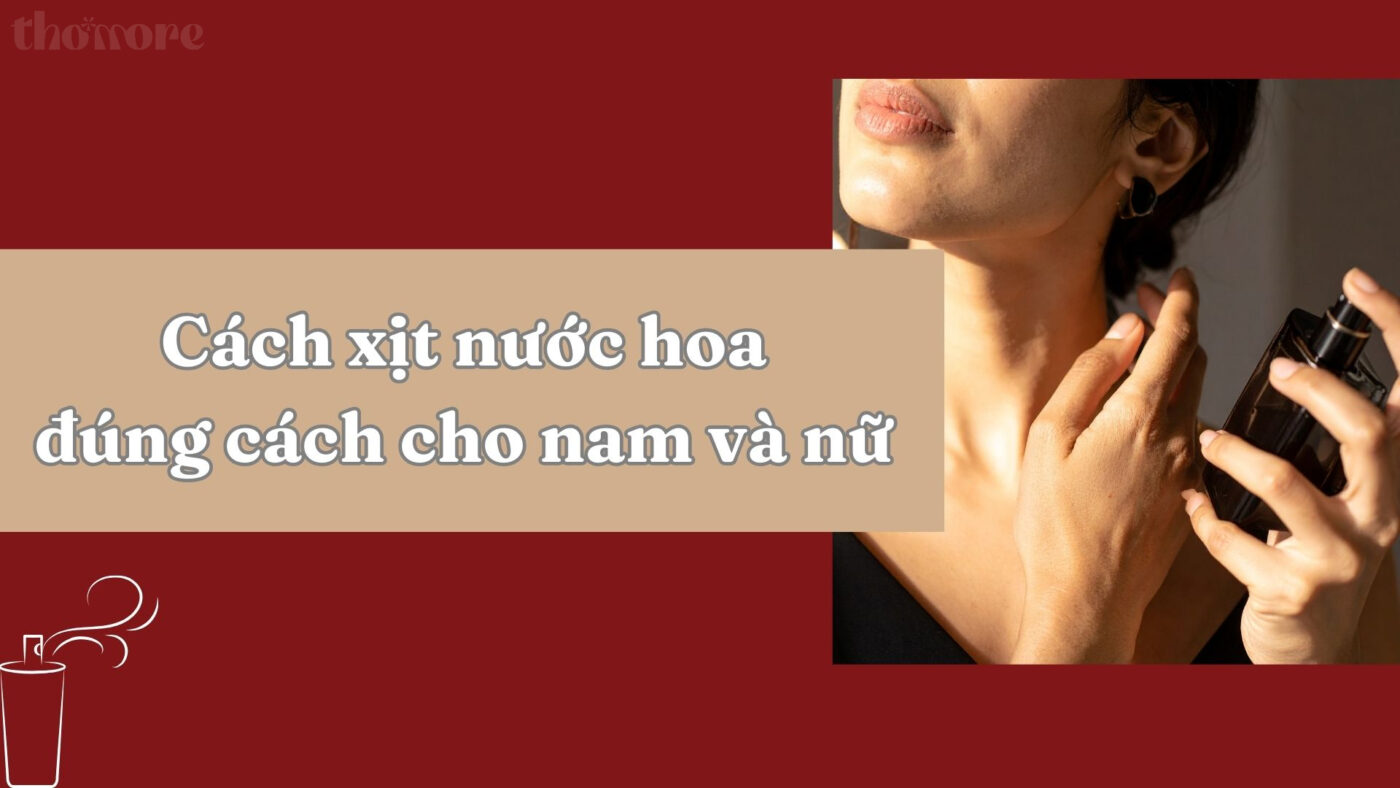
How to Apply Perfume Properly: A Complete Guide for Men and Women
Jan
Perfume is an invisible signature that complements your personal presence. However, many fragrance lovers find their favourite scent fades within an hour or turns uncomfortably strong simply because of incorrect application techniques. Knowing how to apply perfume properly allows the full three-tier fragrance pyramid to unfold naturally while maximising longevity. This comprehensive guide from Thơmore details the ideal spraying distance, pulse point selection, occasion-specific dosing, the science of skin moisture, and common application mistakes to avoid.
Quick Summary
- Optimal spraying distance: Hold the atomiser nozzle 15 to 20 cm away from the skin to generate a fine, even mist rather than a concentrated liquid droplet on a single point.
- Target key pulse points: Apply to the nape of the neck, behind the earlobes, along the collarbones, and on inner wrists where arterial warmth diffuses aroma molecules naturally upward.
- Never rub your skin: Avoid rubbing wrists together after spraying; friction produces kinetic heat that shears delicate top notes and accelerates premature evaporation.
- Moisture acts as an anchor: Applying an unscented moisturising lotion or a dab of petroleum jelly creates a lipid layer on the stratum corneum, locking scent molecules onto the skin up to 30% longer.
- Dosing by environment: 2 to 3 sprays for enclosed offices and corporate meetings; 3 to 5 sprays for evening gatherings, open-air events or festive occasions.
Why does proper perfume application matter?
Correct application transforms a simple spray into an elegant, lasting olfactory experience:
- Maximises value and longevity: Proper technique ensures your perfume lasts throughout the day without wasting costly sprays through excessive reapplication.
- Allows natural note transition: Perfumes are constructed with top, heart, and base notes. Gentle misting allows the opening citrus or greens to transition seamlessly into florals and woods without thermal distortion.
- Prevents olfactory fatigue: Spraying excessively near your nose causes sensory adaptation (nose blindness), leading wearers to think their perfume has disappeared when it remains overpowering to others.
- Creates a courteous, polite sillage: A well-applied fragrance creates an alluring personal scent bubble within arm’s reach rather than suffocating an entire room.
How to apply perfume properly: The expert step-by-step technique
Following these sequential steps guarantees optimal diffusion and enduring performance:
Step 1: Apply immediately after bathing
The best time to apply perfume is straight after a warm shower and gentle towel drying. Clean skin is free of accumulated sweat, dust, and competing body odours, and warm skin pores absorb and bond with aromatic oils much more effectively.
Step 2: Hydrate and moisturise your skin
Dry skin acts like a sponge, drawing in the alcohol solvent and allowing aromatic oils to flash off rapidly into the air. Applying an unscented body lotion or gentle balm to your pulse points creates an oily lipid film that anchors the fragrance molecules.
Step 3: Maintain a 15 to 20 cm distance
Holding the bottle too close (under 5 cm) squirts a wet jet that can run down the skin and cause uneven concentration. A 15 to 20 cm distance disperses a broad, fine mist that blankets a wide area of skin uniformly.
Step 4: Allow the perfume to air-dry naturally
After spraying, let the fragrant mist settle and dry undisturbed for 30 to 60 seconds before getting dressed. Never rub or dab your wrists together.

How to apply perfume according to setting and occasion
Adjusting your spray placement and dosage according to your environment ensures you always make the right impression:
- Professional office and corporate meetings: Use 2 to 3 sprays. Focus on lower pulse points such as the base of the throat, collarbones beneath your shirt, or inner elbows. This ensures an intimate, polished sillage that remains agreeable in enclosed conference rooms.
- Dates and evening dinners: Use 3 to 4 sprays. Target the nape of the neck, behind the ears, and inside wrists. As body warmth rises during close conversation, the fragrance releases subtle, alluring waves.
- Summer daytime and outdoor activities: Use 2 to 3 sprays of fresh, light scents. Spray onto the back of the neck or along clothing hems. Avoid spraying sun-exposed bare skin to prevent photosensitivity reactions.
- Parties, galas and weddings: Use 4 to 5 sprays. Add a mist onto the back of the knees or fabric linings to leave a distinctive, elegant scent trail as you move across the room.
Comparison of perfume application zones on the body
The table below compares different application points on the body, evaluating their relative warmth, projection profile, longevity rating, and ideal setting:
| Application Zone | Warmth Level | Projection Profile | Longevity Rating | Best Setting |
|---|---|---|---|---|
| Nape of the neck | High | Upward, leaves a graceful trail | 8 – 10 hours | Everyday office, social dinners, dates |
| Behind the earlobes | High | Intimate, close-contact sillage | 6 – 8 hours | Dates, evenings, private gatherings |
| Collarbones & chest | Medium to High | Subtle diffusion through clothing | 7 – 9 hours | Professional meetings, corporate wear |
| Inner wrists | High (moves frequently) | Dynamic, expressive projection | 4 – 6 hours (fades faster with handwashing) | Casual outings, cafe visits, personal enjoyment |
| Inner elbows & knees | Medium | Slow, steady release | 8 – 10 hours | Hot summer days, outdoor events |
How to make your perfume last even longer
To extend the lifespan of your fragrance without overloading your senses, apply these advanced techniques:
- Layer with matching or neutral body care: Using a body wash and lotion that share similar woody or floral accords creates complementary base foundations that support the perfume all day.
- Spray clothing fabrics carefully: Fabrics like wool, cashmere, and high-quality cotton hold onto aroma molecules for days because they do not sweat. Always test a hidden hem first and avoid dark, coloured juices on pure white silk or linen.
- Use petroleum jelly as a base: Dab a tiny amount of unscented petroleum jelly onto pulse points before spraying. The petrolatum lipid base holds the fragrance droplets from sinking into porous skin.
- Store bottles properly: Keep fragrances in a cool, dark drawer away from bathroom humidity, radiators, and sunlight. Heat and moisture degrade the volatile essential oils and ruin the formula.

The science of scent longevity: Friction and moisture
Understanding the biophysical interaction between fragrance solutions and human skin reveals why common habits ruin performance:
- Thermal friction and molecular shear: When you rub your wrists together, the rapid movement generates localised friction heat reaching 38°C or higher. This kinetic energy shears the delicate molecular bonds of top-note monoterpenes and aldehydes, accelerating their evaporation and flattening the scent into a distorted base within seconds.
- Hydration and lipid partition coefficient: Human skin consists of the stratum corneum, composed of corneocytes surrounded by an intercellular lipid matrix (ceramides, cholesterol, fatty acids). Fragrance aroma compounds are lipophilic (oil-soluble). On well-hydrated skin with adequate lipids, the aroma molecules partition into the lipid matrix and release slowly over hours. On dry, dehydrated skin, the alcohol base evaporates instantly, leaving dry perfume residues with minimal staying power.
Common mistakes when applying perfume
Watch out for these common missteps that diminish your fragrance experience:
- Rubbing wrists vigorously: The single most widespread mistake in fragrance wear. Always let the mist air-dry naturally.
- Using perfume as an underarm deodorant: Perfume contains high concentrations of alcohol that can severely irritate shaved underarms, and mixing perfume oils with active apocrine sweat glands creates an unpleasant sour smell. Use an antiperspirant for odour control and perfume for fragrance.
- Spraying directly onto precious jewellery: The alcohol and essential oils in perfume can corrode pearls, tarnish silver, and damage the lustrous coating of fashion jewellery. Apply perfume and let it dry before putting on accessories.
- Spraying blindly into the air and walking through: Walking through a “fragrance cloud” wastes 80% of the perfume onto the floor while distributing microscopic droplets unevenly across your hair and clothes.
- Overspraying due to nose blindness: Your olfactory receptors naturally tune out continuous scents after 20 to 30 minutes. If you cannot smell your own fragrance, ask a friend before spraying again.
Frequently Asked Questions
How many sprays of perfume should I apply?
For most Eau de Parfum and Eau de Toilette fragrances, 2 to 4 sprays is optimal. Apply 1 spray to each side of the neck and 1 to your wrists or chest. For heavy winter orientals, 2 sprays are sufficient, while light summer colognes may take 4 to 5 sprays.
Should you spray perfume on your skin or on your clothes?
Both have advantages. Spraying on skin pulse points allows body heat to warm the oils and unfold the full fragrance pyramid. Spraying on natural clothing fibres (like cotton or wool) prevents skin absorption and extends longevity for days. Ideally, spray on skin pulse points and add 1 light mist to your collar or clothing.
Why should you never rub your wrists together after spraying?
Rubbing generates friction heat that crushes the delicate volatile molecules of the top notes, such as citrus and light florals. This alters the intended scent progression and significantly shortens the overall longevity of the perfume.
Does applying petroleum jelly before perfume really help it last longer?
Yes. Petroleum jelly (Vaseline) provides an occlusive lipid barrier on the skin. Because fragrance oils are lipophilic, they dissolve into the petroleum jelly layer rather than evaporating quickly with the alcohol, extending wear time by several hours.
What should I do if I accidentally spray too much perfume?
Wipe the affected skin with a cotton pad soaked in rubbing alcohol or warm soapy water to dissolve the excess fragrance oils. If the scent is trapped in clothing, switch garments or air the fabric out with a hairdryer on the cool setting.
Related articles
- How to Apply Perfume So It Lasts: Seven Practical Rules
- How to Apply Perfume for Men: Where, How Far and How Many Sprays
 Tiếp tục với Zalo