

 Tiếng Việt
Explore with Thomore
How to Apply Perfume for Men: Where, How Far and How Many Sprays

Oct
Perfume is part of a man’s style, but a few common habits quietly undo it: too many sprays, the wrong spots, rubbed wrists. This guide from Thơmore covers where men should apply perfume, how far to hold the bottle, how many sprays is enough, and two questions most guides skip: skin or clothes, and what to do on a hot, sunny day.
To apply perfume properly as a man, spray 2–4 times onto warm skin such as the wrists, behind the ears, the back of the neck or the chest, holding the bottle about 10–15 cm away, then let it dry naturally instead of rubbing it in. Adjust the amount and the scent family to the setting: an office calls for less than an evening date.
Quick Summary
- Choose warm skin: wrists, behind the ears and the back of the neck, chest, inner elbows.
- Hold the bottle about 10–15 cm from the skin; 2–4 sprays per application is enough, not 2–4 sprays an hour.
- Let perfume dry on its own and never rub your wrists together.
- Dry skin holds scent less well: moisturise with an unscented cream before spraying.
- Woody, citrus and herbal scents suit the office; spice, amber and leather suit an evening date.
Why should men learn to apply perfume properly?
Because perfume is not only about smelling pleasant; it is part of how you present yourself. A scent that is well chosen and projects just enough makes a man feel confident and leaves a lasting impression. Applying it well does five things:
- It leaves an impression. Scent is a personal signature people remember, and used with care it signals polish and maturity.
- It builds confidence. The right fragrance makes you feel at ease in meetings, on dates and at work.
- It lasts longer. Spraying the warm points of the body helps the scent hold through the day, so each bottle goes further.
- It keeps others comfortable. Too much becomes harsh; the right amount stays refined and pleasant for the people around you.
- It lets the composition unfold. Every perfume is built in layers, and applied properly it develops the way the perfumer intended.

How to apply perfume as a man, step by step
A few basic rules make the difference between a scent that works for you and one that overwhelms the room.
Choose a scent that suits the setting
The first and most important step is choosing a fragrance that suits you and the occasion:
- Office and work: light, refined woody, citrus or herbal scents feel professional and considerate towards colleagues.
- Dates and events: warmer, more seductive spice, amber or leather scents make a stronger impression.
- Weekends and travel: marine, fresh fruit or green scents feel relaxed and energetic.
Concentration matters too. An eau de toilette (EDT) is usually lighter and easy for daytime, and an eau de parfum (EDP) is usually richer and longer-lasting for evenings. These are trade conventions rather than legal definitions, so try the actual bottle; EDP vs EDT explains the difference.
Spray the warm “golden” spots
Aim for pulse points and warmer areas rather than spraying all over. The usual spots are the wrists, the back of the neck and behind the ears, the chest, the inner elbows and the inner thighs. The table groups them by why they work and what to avoid, so you can choose 2–3 rather than using them all at once:
| Spot | Why it is popular | What to watch |
|---|---|---|
| Wrists | Thin, warm skin you can smell again through the day | Do not rub your wrists together afterwards |
| Back of the neck and behind the ears | The scent lifts gently as you move your head | Keep your distance so the mist stays out of your eyes |
| Chest | Warm and covered by clothing, so the scent rises slowly and discreetly | Spray before dressing to avoid marks on fabric |
| Inner elbows | The scent moves with your arms | Use it instead of another spot, not in addition |
| Inner thighs | Steady warmth, the scent rises discreetly from below | A small amount only |
Distance and number of sprays
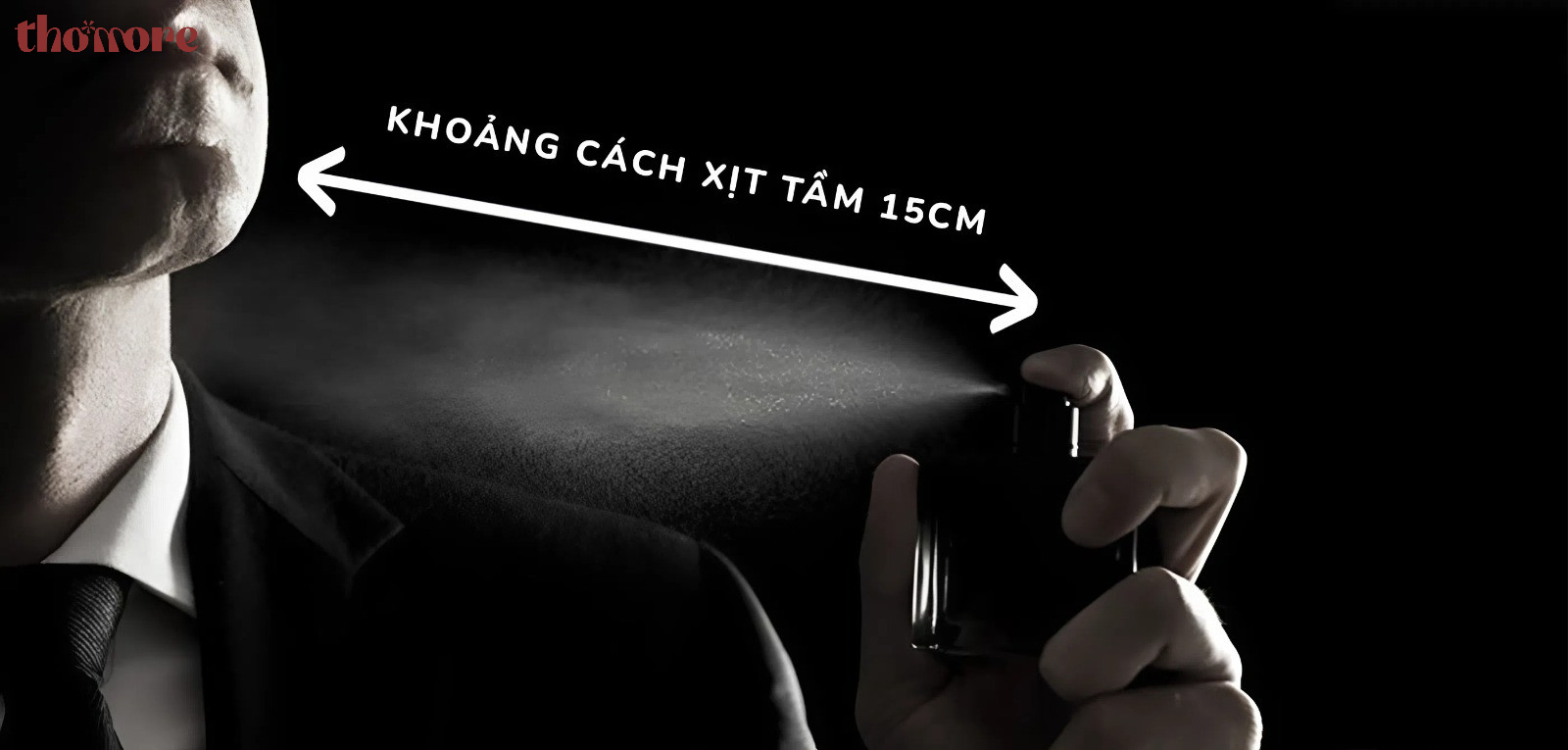
Hold the bottle about 10–15 cm from the skin so it forms a fine mist that spreads evenly. Spraying too close concentrates the perfume into a wet patch that wears less evenly and, because of the alcohol, can irritate the skin.
Keep the number of sprays in check too: 2–4 sprays per application, on points such as the wrists, behind the ears or the chest. More sprays do not make the scent last longer; they only make it heavier for you and everyone around you.
Common mistakes to avoid
- Mixing several perfumes: the result smells muddled and loses definition.
- Re-spraying all day: the scent turns harsh and tiring for people nearby.
- Rubbing your wrists: it does not help the scent last and tends to make it fade faster.
- Soaking the outside of your clothes: thin or light-coloured fabric can stain. If you want scent on clothing, spray the inside or the lining.
- Spraying onto skin that is not clean: body odour and perfume mix into something unpleasant.
Tips to make men’s perfume last longer
- Apply after a shower. Clean, dry skin with no sweat or dust lets the perfume smell as designed, without mixing with body odour.
- Moisturise first. Dry skin loses scent faster, so an unscented moisturiser helps the perfume hold.
- Combine skin and clothing. Pulse points make the scent richer and carry it on body warmth; a spray on the inside of a shirt keeps it closer to the original for longer. Avoid soaking thin, light-coloured fabric.
- Focus on pulse points. Wrists, behind the ears, the back of the neck and the chest diffuse the scent best.
- Store the bottle well. Keep it somewhere cool, away from direct sun, heat and humid rooms such as the bathroom; see how to store perfume.
For the general principles of making any perfume last, including in a hot, humid climate, see how to apply perfume so it lasts.
Skin or clothes, and should you avoid the sun?
Both questions are often answered by instinct. Official guidance from the big houses and the fragrance industry’s safety limits give clearer answers.
Skin and clothing both work, each in its own way. According to CHANEL’s fragrance FAQ, applying to pulse points such as the wrist and neck intensifies a fragrance, while applying to clothing preserves the original scent; the house notes that some delicate fabrics can stain and recommends spraying the inside of clothing or its lining. Dior also advises moisturised pulse points: wrists, neck and chest. In other words, clothing does not ruin a perfume; what to avoid is soaking the outside of thin or light-coloured fabric.
Citrus scents and strong sun. Some citrus oils, above all cold-pressed bergamot, naturally contain furocoumarins, which can react with UV light on the skin. The EU’s Scientific Committee on Consumer Safety (SCCS/1459/11) records that such reactions caused redness followed by darkened skin, and that limits on furocoumarins in fragrance products mean they “still occur but are rare”. The limits work on two levels: Regulation (EC) No 1223/2009 bans furocoumarins in cosmetics except for the amount naturally present in essential oils (Annex II, entry 358), and the current IFRA Standard caps cold-pressed bergamot oil at 0.40% in fine fragrance, citing its phototoxic effects (IFRA Standard).
In practice, on a day you will spend long hours in strong sun, spray covered areas such as the chest or the inside of your shirt rather than the neck and the back of the hands. Guerlain also advises avoiding sun exposure straight after applying perfume. If your skin reacts easily, test one spray on the wrist and watch it through the day before using more spots.
Thơmore perfume for men
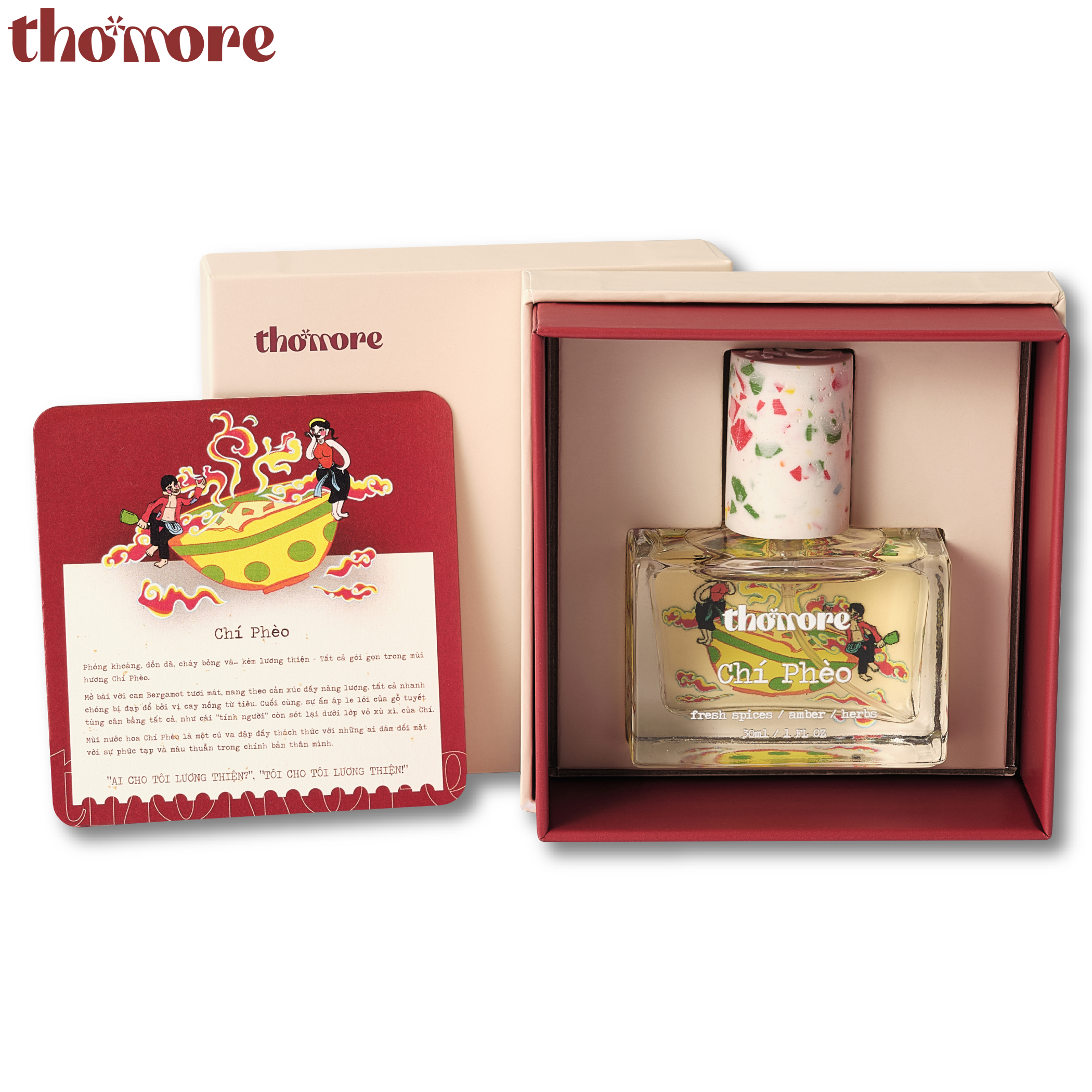
Thơmore is a Vietnamese perfume house whose scents each carry a story drawn from Vietnamese literature. For men, Chí Phèo (after Nam Cao’s short story of the same name) is one of the most distinctive: bold and rough-edged on the surface, with a quieter warmth underneath.
Notes:
- Top: bergamot and Calabrian pepper
- Heart: Sichuan pepper, lavender, vetiver, patchouli and geranium
- Base: ambroxan, cedarwood and labdanum
Longevity (brand figure): 8–12 hours, depending on skin and conditions
Projection (brand figure): about 2 metres around you
Price: 750,000 VND / 30 ml
Applying perfume well is less about the product than about restraint: the right scent for the setting, a few sprays on warm skin, no rubbing. Get those right and your fragrance becomes a signature rather than a cloud.
Frequently Asked Questions
Where should men apply perfume?
On warm skin: the wrists, behind the ears and the back of the neck, the chest or the inner elbows. Two or three spots are enough; there is no need to spray all over. On a sunny day, choose a covered area such as the chest.
How many sprays of perfume are enough for a man?
Two to four sprays per application. Keep to the lower end in closed spaces such as an office or a car; in the evening or outdoors you can use a little more. More sprays do not make the scent last longer, they only make it harsher.
Should you rub your wrists after spraying perfume?
No. Let the perfume dry naturally on the skin; rubbing your wrists together does not help it last and tends to make it fade faster.
Can men spray perfume on their clothes?
Yes. CHANEL says applying to clothing preserves the original scent, but delicate fabric can stain, so the house recommends spraying the inside of clothing or the lining. Avoid soaking the outside of light-coloured fabric.
Should you spray perfume on your neck before going out in the sun?
If the scent is citrus-heavy, especially with bergamot, and you will be in strong sun for a long time, spray a covered area instead of the neck. Bergamot oil contains furocoumarins that can react with UV light; IFRA limits them in perfume so reactions are rare, but keeping freshly sprayed skin out of direct sun is the safe choice.
 Tiếp tục với Zalo