

 Tiếng Việt
Explore with Thomore
Top, Heart and Base Notes: What the 3 Layers of a Perfume Mean

Jun
If you have ever wondered what top, heart and base notes actually are, this is the short, practical answer. This guide from Thơmore explains each layer, how long each one typically lasts on skin, why the “pyramid” is a description rather than three physical layers, and how to use the notes to choose a perfume, with three Thơmore scents as examples.
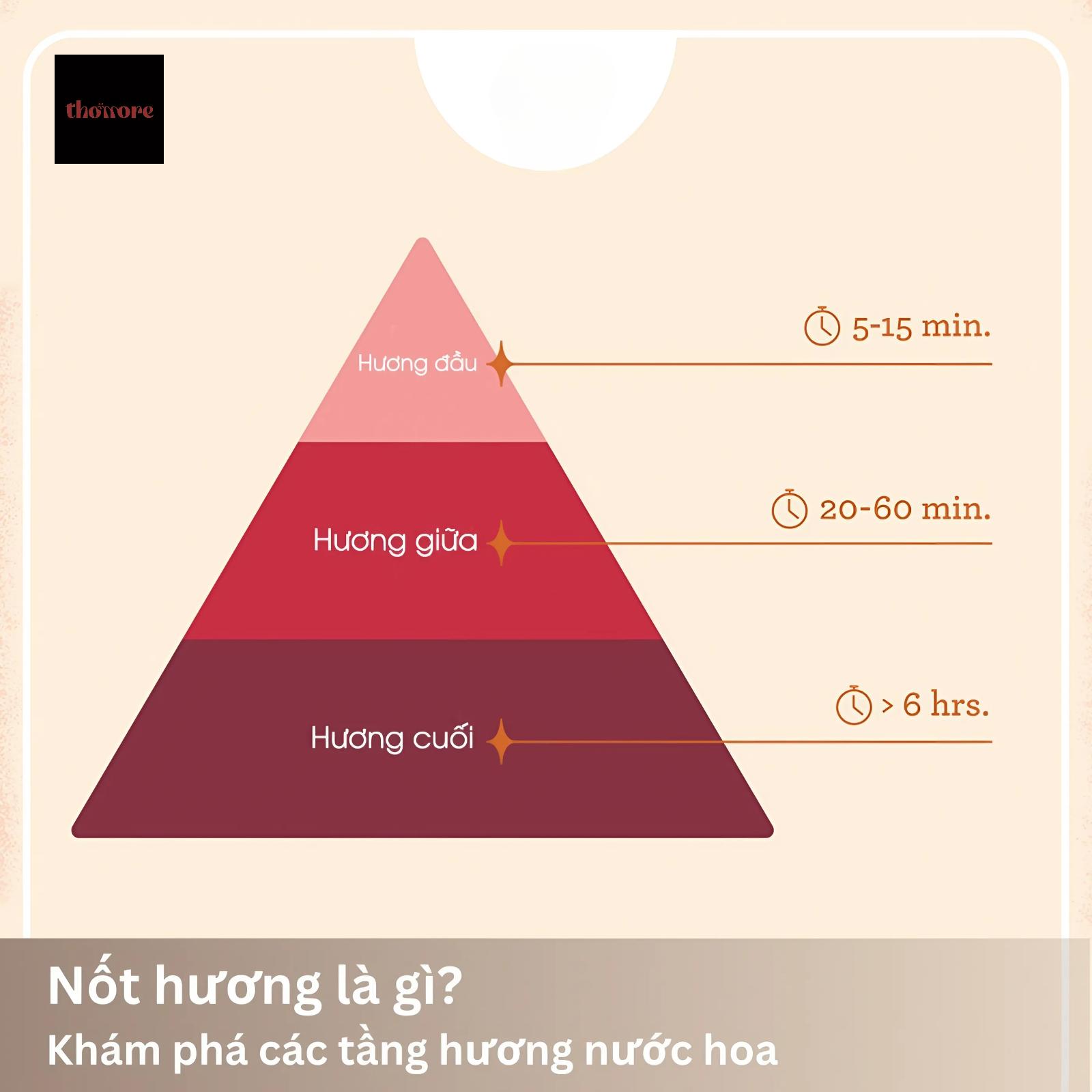
Top, heart and base notes are the three stages of scent you notice one after another once a perfume is on your skin. Top notes are the most volatile ingredients, the ones you smell the moment you spray; heart notes give the perfume its character and come through as the top fades; base notes are the slowest to evaporate and stay on the skin the longest.
Quick Summary
- The three layers describe the order in which you smell a perfume over time, because each ingredient evaporates at its own speed.
- Top notes are usually citrus or green; heart notes are floral, herbal or spicy; base notes are woods, musk, amber and vanilla.
- Typical times on skin: top notes about 15–30 minutes, heart notes about 3–4 hours, base notes more than 4 hours.
- There is no standard percentage for how much of a formula each layer takes.
- To choose well, screen on a paper strip, then wear it on skin for a few hours before deciding.
What is a perfume note?
A note is one individual smell within a perfume, such as bergamot, jasmine or cedarwood. Notes are grouped into top, heart and base according to when they are most noticeable on the skin, from the first spray to the final trace.
Most perfumes are described with these three layers. How much of the formula each layer takes has no standard figure: every perfumer balances it to suit the idea behind the scent. What every bottle shares is the order you smell it in: fast-evaporating notes arrive first and slow-evaporating notes stay last.
What are top, heart and base notes?
Think of a perfume as a piece of music in three movements that play in sequence, so the scent shifts gently from the moment you spray to the moment it fades.
1. Top notes
The top notes are the first thing you smell. They are light and volatile, typically lasting around 15–30 minutes, and they create the first impression: usually fresh, bright and uplifting, the “hello” of the perfume.
2. Heart notes
As the top notes fade, the heart comes through. It is the centre of the composition and links the opening to the base; heart notes are typically noticeable for about 3–4 hours and give the perfume its character, often through flowers, herbs or spices.
3. Base notes
Once the heart softens, the base takes over. These notes last longest on the skin, typically more than 4 hours, and are what still lingers on a scarf or jumper at the end of the day. They are usually warm and deep, and they hold the whole composition together.
The three layers at a glance
The times in the table come from a scientific review of perfume published in the journal Molecules (2021). They are typical figures on skin, not fixed specifications: the same layer can be shorter or longer depending on the formula, the concentration, your skin and the weather.
| Layer | When it is clearest | Typical ingredients | Example: Thơmore Chí Phèo |
|---|---|---|---|
| Top notes | From the first spray; typically about 15–30 minutes | Citrus, green notes, light spices | Bergamot, black pepper |
| Heart notes | Emerges as the top fades; typically about 3–4 hours | Flowers, herbs, spices | Spices and herbs |
| Base notes | Lasts longest; typically more than 4 hours | Woods, musk, amber, vanilla, resins | Cedarwood, ambroxan |
The example column follows the note description on the Chí Phèo product page: it opens with bergamot and black pepper, then settles into cedarwood and ambroxan.
Are the three layers really separate inside the bottle?
No. Inside the bottle, every ingredient is dissolved in one solution. The “fragrance pyramid” is how perfumers describe the experience: the review in Molecules traces the three-layer model to the perfumer Jean Carles, and IFF, one of the world’s largest fragrance companies, likewise describes perfumes as structured “like a music partition”, with bright, fleeting top notes, rich and expressive heart notes, and deep, long-lasting base notes.
What creates the layers is evaporation. The alcohol leaves first; then the fragrance ingredients evaporate at the same time, each at its own rate depending on its vapour pressure and its concentration in the mixture. A study that measured this directly on skin (Vuilleumier and colleagues, International Journal of Cosmetic Science, 1995) applied 11 fragrance ingredients to the forearm and recorded that each one diffused into the air at a different rate. Light, volatile materials dominate at first, so we call them top notes; heavy, slow ones remain at the end and become the base.
Seeing it this way avoids two misunderstandings. First, the top notes do not disappear before the heart “takes its turn”: the layers overlap and blend into one another. Second, what you smell in the first few seconds in a shop is mostly the top notes, not the scent that will stay with you all day. Why perfumers build scents in several layers rather than a single smell is covered in why perfume has note layers.
How to choose a perfume using its notes
Each layer is a different stage on your skin, so a quick sniff is not enough to decide. A simple three-step method:
Step 1: Try it on a paper strip and wait. Spray a little on a blotter and wait 5–10 minutes for the notes to start developing; this gives you a first sense of the heart, which carries most of the character.
Step 2: Wear it on skin. If you still like it, spray your wrist or the back of your neck and wait 2–3 hours while you go about your day. Body warmth and your skin change how a perfume smells, and this is when you meet the scent that really stays.
Step 3: Judge the feeling and the staying power. If a few hours later the scent still makes you feel comfortable and confident and does not bother the people around you, it suits you. Every perfume behaves differently on different skin, so never decide on the top notes alone.
Tips:
- Shop for perfume in the morning, when your sense of smell is fresh.
- Avoid scented creams or other perfumes before testing.
- Test no more than two or three perfumes at a time so your nose does not get muddled.
Three Thơmore perfumes by their notes
Here are three Thơmore scents, each representing a different family, to show how the layers play out in practice.
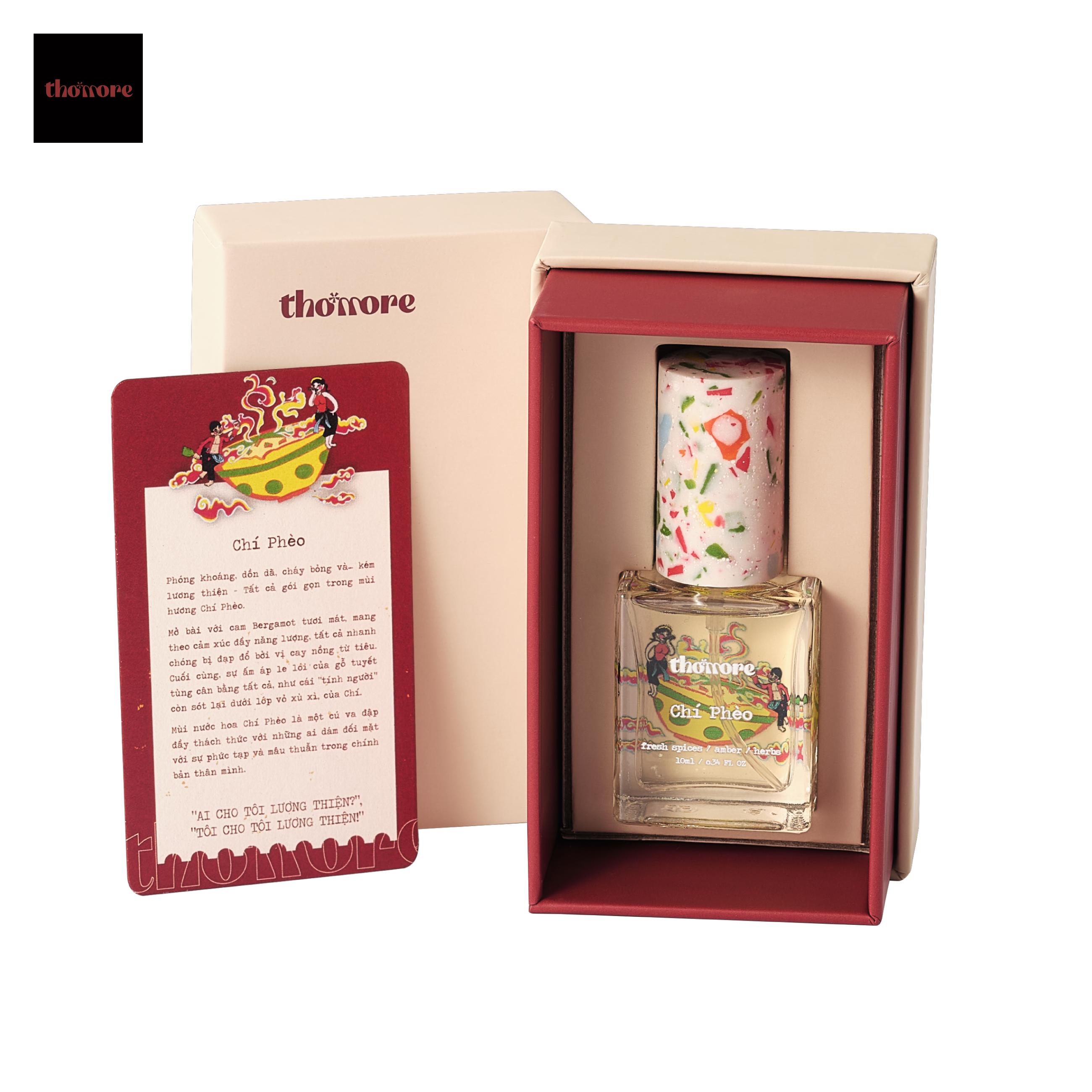
1. Chí Phèo
Named after Nam Cao’s short story “Chí Phèo”, whose hero is rough on the outside but full of feeling, this is a bold, masculine scent built on spice, herbs and amber.
- Top: bergamot, Calabrian black pepper
- Heart: Sichuan pepper, pink pepper, lavender, geranium, patchouli
- Base: cedarwood, labdanum, ambroxan
2. Số Đỏ
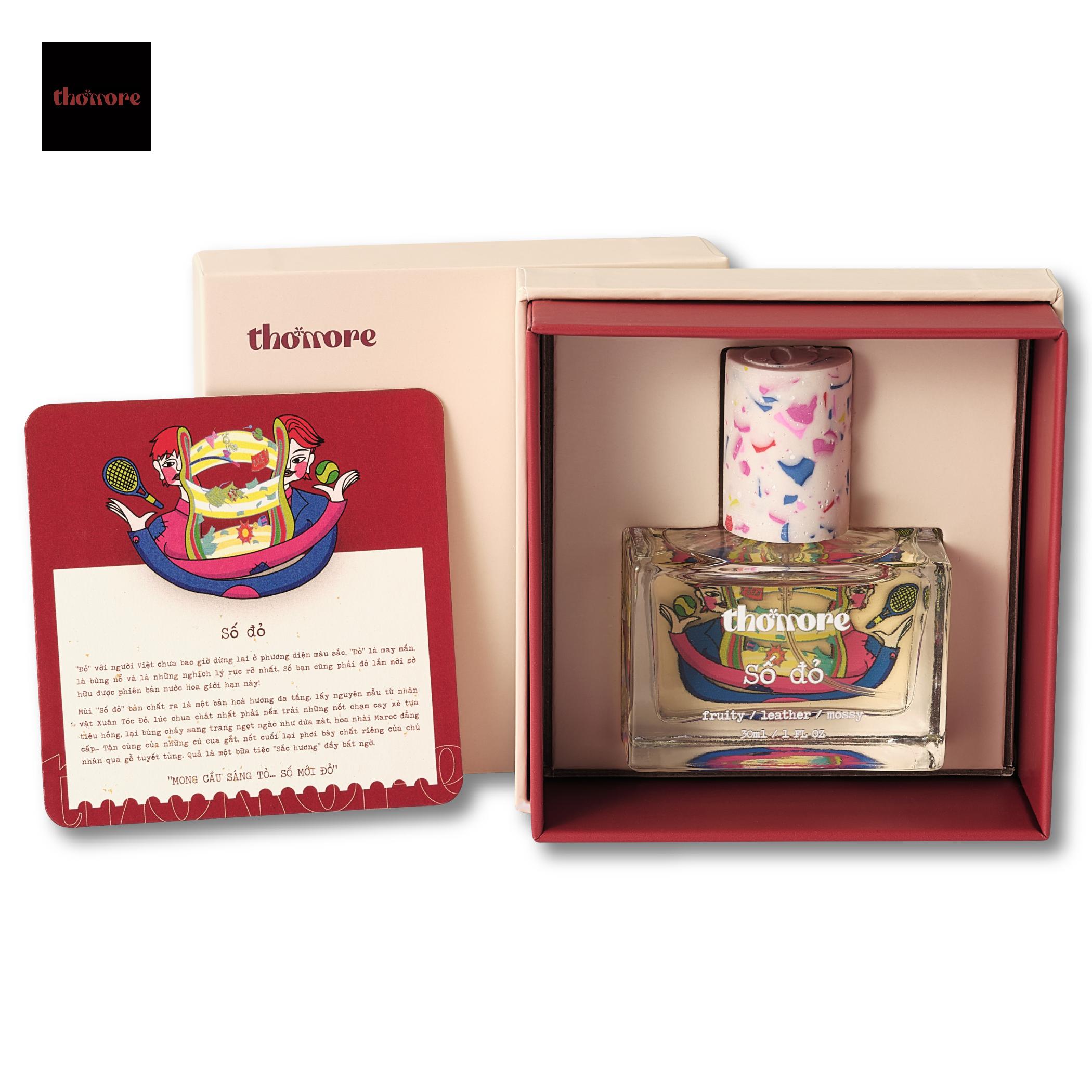
Named after Vũ Trọng Phụng’s satirical novel “Số Đỏ” (known in English as “Dumb Luck”), this is a modern, attention-seeking scent for strong personalities: fruit over moss and woods.
- Top: bergamot, apple, black grape, pink pepper, lemon
- Heart: pineapple, patchouli, Moroccan jasmine
- Base: cedarwood, musk, ambroxan, oakmoss
3. Thu Điếu
Named after Nguyễn Khuyến’s poem “Thu Điếu” (“Autumn Fishing”), this is a gentle, romantic autumn scent of white flowers and woods.
- Top: osmanthus, orange, mandarin, peach, cinnamon
- Heart: tuberose, May rose, jasmine, narcissus
- Base: sandalwood, vetiver, patchouli, cedarwood, amber

Knowing what top, heart and base notes are helps you choose more accurately and enjoy the whole journey a perfume takes on your skin. At Thơmore, we think of each layer as a moment: the first impression, the depth that follows, and the trace that lingers.
Frequently Asked Questions
What are the top, heart and base notes of a perfume?
They are the three stages of scent over time after you spray. Top notes are the first impression, fresh and quick to fade; heart notes give the perfume its character; base notes are deep and lasting and stay on the skin the longest.
What is a note in perfume?
A note is one individual smell in a perfume, such as bergamot, jasmine or cedarwood. Notes are grouped into top, heart and base according to when they are most noticeable on the skin.
How many layers does a perfume have?
Perfumes are usually described with three: top, heart and base. It is a description of the experience over time; inside the bottle every ingredient is in one solution, and there is no standard percentage for each layer.
Why does perfume have three layers?
Because each ingredient evaporates at a different rate. Light, volatile materials appear first and heavy, slow ones stay last. Perfumers use this so a scent moves from bright and fresh to deep and warm.
How long should I wait before deciding to buy a perfume?
Wear it on skin for at least 2–3 hours so you can smell the heart and start to meet the base. A paper strip is only a quick filter; the scent on your skin is the one that stays with you all day.
 Tiếp tục với Zalo