

 Tiếng Việt
Explore with Thomore
Can Perfume Testers Be Fake? Check the Source
Dec
Yes, a bottle advertised as a “tester” can still be fake. A tester is intended for trying a fragrance; the word tester, a plain box or a missing cap does not prove origin. Check the seller, the exact version and the condition of the individual bottle.
Quick Summary
- Tester describes a purpose, not a certificate of authenticity.
- Testers, samples and decants are different forms.
- A barcode, neat bottle or strong performance is supporting information rather than proof.
- Prefer official channels, purchase evidence and a clear returns process.
How do testers, samples, decants and retail bottles differ?
| Form | Purpose or packing source | What to verify |
|---|---|---|
| Tester | A bottle used for trying fragrance at a point of sale | Source, fill level and whether it has been opened or used. |
| Sample | A trial format supplied through a brand programme | Product name, version and accompanying label. |
| Decant | Liquid transferred from another bottle | Source bottle and who performed the transfer. |
| Retail bottle | A bottle with its retail presentation | Sales channel, version, volume and receipt. |
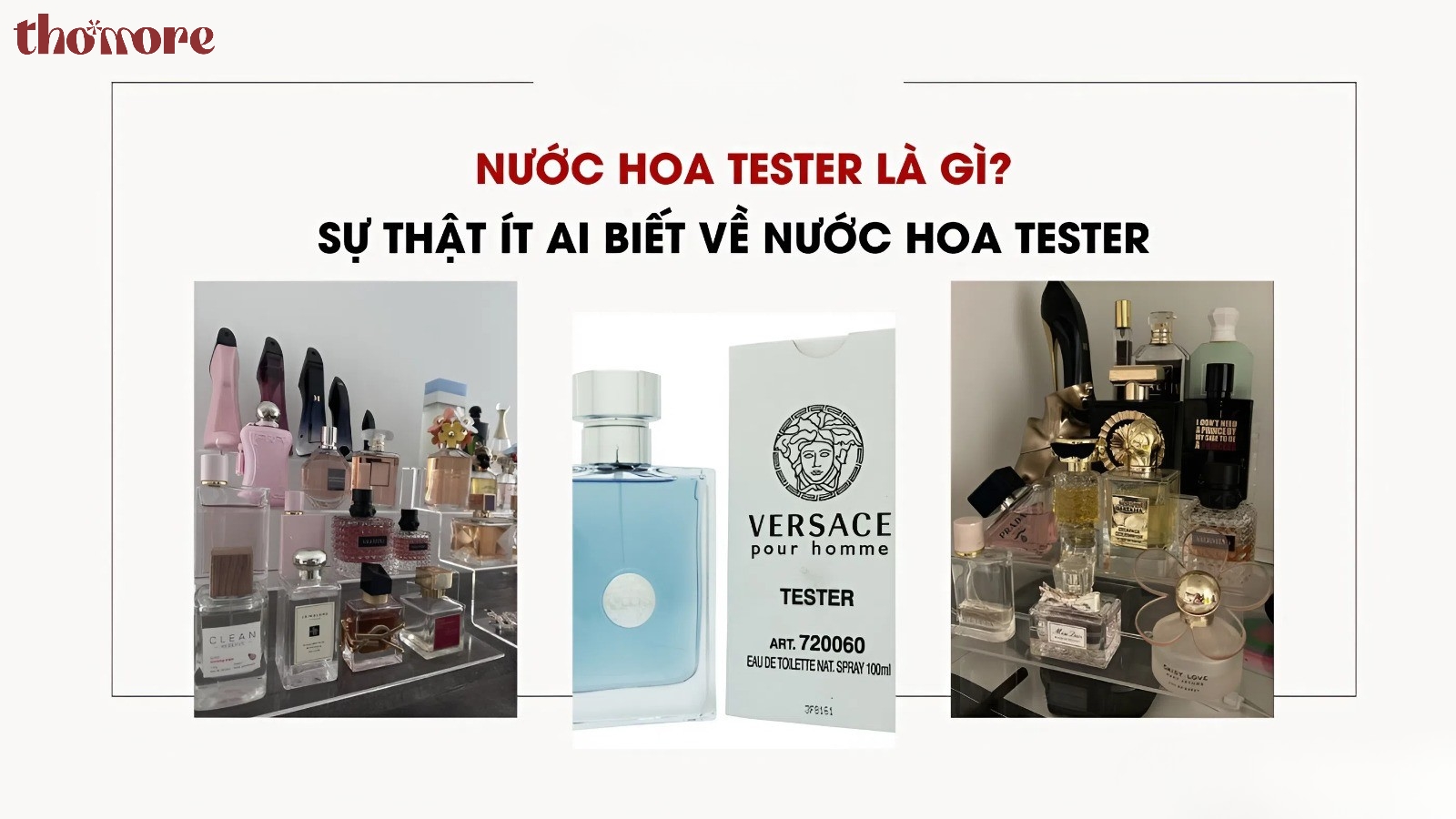
Do not call every small bottle a tester. A counter tester may differ from a miniature or spray sample in both packing and purpose. CHANEL distinguishes miniatures from mini spray samples supplied by authorised retailers; size alone does not identify the form.
Why are a plain box and a low price insufficient?
Simple presentation may occur with a tester, but counterfeit sellers can repeat the same explanation. A low price does not prove a fake, while a near-retail price does not prove authenticity. There is no universal discount percentage that validates every tester.
Separate two questions: is the source clear, and what condition is the bottle in? Even with a known origin, a display bottle needs checks for fill level, atomiser, leakage and storage. Do not assume every tester is in the same condition as a new retail bottle.
What should you check, and in what order?
- Compare the shop with the brand’s authorised stockist list where available.
- Ask for the full fragrance name, EDT/EDP/Parfum version and volume.
- Ask about purchase origin, evidence and whether the bottle was opened or displayed.
- Check that bottle, box, listing and receipt describe the same item.
- Read the returns and complaints policy before payment.
CHANEL recommends its boutiques and authorised retailers for products it can stand behind. Apply the same principle by finding the official channel for the relevant brand.
How useful are barcodes and smell tests?
A barcode can help match product information, but it cannot establish the history or contents of the individual bottle in your hand. A code image can be copied. Fragrance perception also changes with version, storage and testing method, so strong longevity, apparent “layers” or a fine spray are not authentication tests.
If details conflict, keep photographs and the receipt, then contact the seller or brand. Our authentic perfume checklist combines several forms of evidence. The perfume barcode guide explains what a scan can and cannot show.
Should you buy a tester for yourself or as a gift?
Consider one only when you understand its source, condition and sale terms. For a gift that needs complete presentation, or when you want less verification work, a retail bottle from an official channel may be easier. A seller calling something a tester does not show that the brand authorised its resale.
Thơmore presents its own fragrances in the English product catalogue. This guide does not announce that Thơmore sells testers from other brands.
Frequently Asked Questions
Are perfume testers always genuine?
No. Tester describes an intended use, and the term can be attached to a bottle of unclear origin. Verify the channel, purchase evidence and actual condition.
Are testers always smaller than retail bottles?
Do not distinguish them by volume alone. A tester serves fragrance trials, a sample is a trial format, and a decant is transferred from another bottle.
Does a correct barcode result prove authenticity?
No. It only helps match information associated with the code. It does not prove the source or contents of the individual bottle being sold.
Can longevity authenticate a tester?
No. Wear time is not an authentication method and can vary with the version, storage and use. Give more weight to evidence of origin.
 Tiếp tục với Zalo