

 Tiếng Việt
Explore with Thomore
Literature-Inspired Perfume: How a Story Becomes a Scent

May


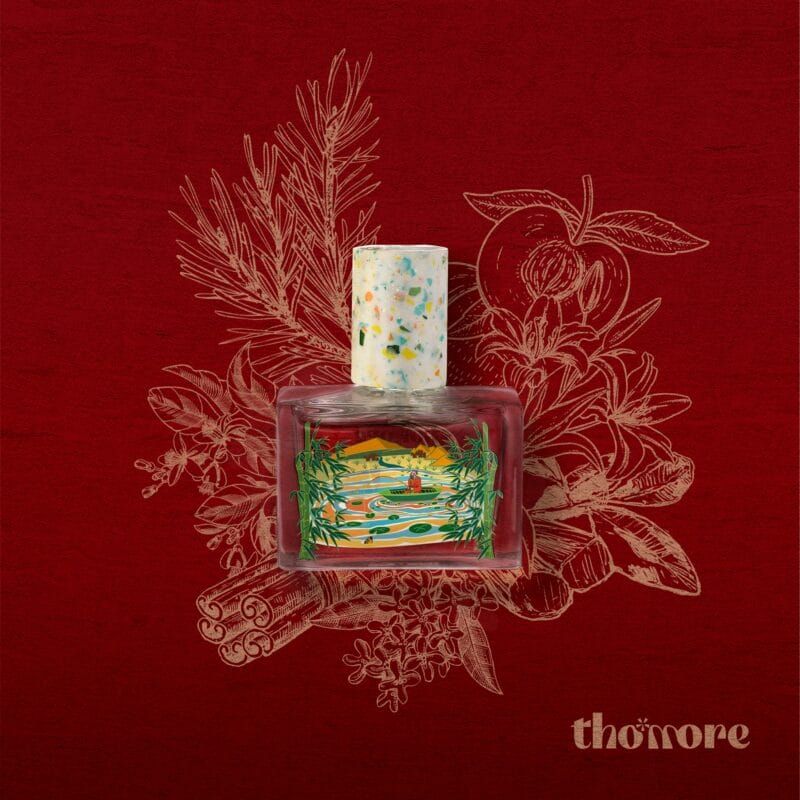


A literature-inspired perfume starts from a story rather than an ingredient list: someone reads a novel or a poem, decides what it feels like, and translates that feeling into notes. Scent has an unusual power to stir memory and emotion and to tie us to a place and its culture, which is why it works so well as a way of telling stories. This guide looks at how a book becomes a bottle, how to choose a story-led scent that suits you, and where culture-inspired perfume is heading.
Quick Summary
- A literature- or culture-inspired perfume is built from a story, a literary work or a cultural symbol, with its mood “translated” into notes.
- The process usually runs in five steps: study the work, pick the emotions and symbols, choose the materials, develop the formula, then test and refine.
- Thơmore’s seven scents are each based on a work of Vietnamese literature, from Nguyễn Du’s “The Tale of Kiều” to Nam Cao’s “Chí Phèo”.
- When choosing, weigh how it wears on your skin, how long it lasts, the season, the occasion and whether the story speaks to you.
Perfume as the art of telling a story through scent
Scent has long played a part in the cultural life of many peoples. Places and cultures tend to have their own characteristic smells, bound up with their history, customs and way of life.
Modern perfumery has grown into a subtle form of storytelling, where a bottle can carry a story told through the way its notes unfold. Culture-inspired houses often draw on local materials, artistic inspiration and history.
At Thơmore, a Vietnamese perfume house, we bring together literature and traditional Vietnamese art in each scent, so that every bottle tells a small part of Vietnam’s heritage through its layers. All seven of our scents take their inspiration from one specific work of Vietnamese literature, and each bottle carries the title of that work, as the table below shows. For the story of how this began, read Vietnamese literature steps out into the street, through scent.
From literature to perfume: how is a story turned into a scent?
Turning a piece of writing into a scent is a demanding creative journey. The perfumer has to “read” the work, feel its emotions and its setting, then translate them into the language of smell.
At Thơmore, each perfume begins with one specific work of Vietnamese literature. We study its place, time, emotions and symbols, then choose materials that can express them. Our lab notes on that process are in the challenge of bottling Vietnamese culture.
Take Kiều, inspired by the heroine of Nguyễn Du’s “The Tale of Kiều”. According to the formula we publish, it is built around peony, rose, white musk and woods: bright flowers for her beauty, warm musk and woods for the depth of a woman who has come through many hardships.
Creating a literature-inspired perfume usually involves five main steps:
- Researching and analysing the literary work
- Identifying its key emotions and symbols
- Choosing suitable materials
- Developing the formula
- Testing and refining the finished perfume
Thơmore’s seven scents and the literature behind them
| Scent | Literary work | Author | Published notes |
|---|---|---|---|
| Kiều | “The Tale of Kiều” | Nguyễn Du | Peony, rose, white musk, woods |
| Đây Thôn Vĩ Dạ | “This Is Vĩ Dạ Village” | Hàn Mặc Tử | Sambac jasmine, May rose, mimosa, musk |
| Bánh Trôi Nước | “Floating Sweet Dumplings” | Hồ Xuân Hương | Raspberry, pomelo, lychee, jasmine |
| Thu Điếu | “Autumn Fishing” | Nguyễn Khuyến | Osmanthus, jasmine, cedarwood, peach |
| Tắt Đèn | “Lights Out” | Ngô Tất Tố | Aldehydes, white musk, citrus, white flowers |
| Số Đỏ | “Dumb Luck” | Vũ Trọng Phụng | Black grape, pink pepper, berries, leather and moss |
| Chí Phèo | “Chí Phèo” | Nam Cao | Pepper, cedarwood, Ambroxan, spices and herbs |
All seven are Eau de Parfum. We state a longevity of 8–12 hours depending on skin chemistry; prices are 289,000 VND for a 10 ml bottle and 750,000 VND for a 30 ml bottle (prices on thomore.vn, checked 20 November 2026).
Blending culture into scent: how do you balance tradition and modernity?
Blending is the art of balancing materials into a harmonious whole. For culture-inspired perfume, the greatest challenge is honouring tradition while still making something that suits how people wear scent today.
One answer is to choose notes that feel familiar to Vietnamese people (jasmine, pomelo, lychee and osmanthus all appear in Thơmore formulas) and pair them with modern materials such as aldehydes or Ambroxan. The result is a scent that feels distinctly Vietnamese yet sits comfortably alongside perfumes from anywhere in the world.
Some materials that evoke Vietnamese culture, and what they suggest:
- Agarwood (oud): refinement and depth of spirit
- Lotus: purity, and a flower long associated with Vietnam
- Jasmine: femininity and grace, and a flower that often appears in Vietnamese poetry
- Cinnamon: warmth, and memories of traditional cooking
- Ginger: energy and vitality
Each is chosen not only for its smell but for the meaning it carries.
How do you choose a culture-inspired perfume that suits you?
Choosing a culture-inspired perfume is not only about finding a smell you like; it is also about finding a story and a set of values you connect with.
Know what you want to express and find a story that fits
Before choosing, ask yourself what you want your scent to say. Story-led perfumes often carry rich narratives, and finding one that matches your personality creates a particular bond. These questions help:
- Which part of a culture’s history, literature or art do you feel drawn to?
- Which side of yourself do you want your scent to express?
- Which story moves you or makes you curious?
Because each of our perfumes comes from a different literary work, from strong and decisive characters to gentle and refined ones, there is a story to suit most personalities. Our guide to choosing a perfume for your personality goes further.
Understand the notes and how they tell the story
Most perfumes are built in three layers: top, heart and base notes. Each plays its part in telling the whole story.
- Top notes are the first impression and fade fastest. In a culture-inspired perfume they often recall something fresh, like young tea leaves or jasmine just opening.
- Heart notes appear as the top notes fade. They are the heart of the story, where its core cultural elements come through.
- Base notes are what stays on your skin for hours. They close the story, usually with deeper notes such as woods and musk.
Understanding this structure helps you judge a scent as a whole and follow the story it tells. For more detail, see top, heart and base notes explained.
What matters most when choosing a culture-inspired perfume?
Five things are worth weighing:
- How it wears on your skin: skin chemistry differs from person to person, so the same perfume can smell different on different people. Try it on your skin and wait at least 30 minutes before deciding.
- How long it lasts: longevity varies with the formula and concentration. Choose one that suits how you plan to wear it; our guide to EDP vs EDT explains the difference concentration makes.
- Season and weather: heat and humidity change how a scent behaves. Floral notes such as jasmine and lotus suit spring and summer, while woods, cinnamon and agarwood suit autumn and winter.
- The occasion: soft florals suit the office, while richer, more complex scents suit evenings out.
- Emotional connection: last and most important, choose a scent you feel a connection to. A culture-inspired perfume carries personal meaning, so empathy with its story is what should decide it.
Where is culture-inspired perfume heading?
Culture-inspired perfume is growing, and a few trends are shaping where it goes next.
The rise of independent perfume houses
Unlike the big houses, independent brands such as Thơmore can be more flexible in what they create, and can tell deeper, more distinctive cultural stories.
In the United States, Circana data shows fragrance was the fastest-growing category in prestige beauty in 2024, up 12%, and it grew a further 6% in the first half of 2025, reaching US$3.9 billion. There are no comparable public figures for Vietnam, but more and more independent perfume brands are appearing there.
By focusing on Vietnamese literature, Thơmore has found its own place in an increasingly crowded market, combining cultural heritage with modern perfumery.
Technology meets cultural heritage
Technology is starting to change how people discover culture-inspired perfume. Some of the directions brands are exploring:
- AR and VR: virtual and augmented reality to place customers inside the cultural world of a scent.
- AI recommendations: analysing personal preferences to suggest scents based on the cultural themes a person cares about.
- Traceability: tools such as blockchain to make production and the origin of materials more transparent.
At Thơmore, the storytelling sits on the product page itself: each bottle has a “Product story” section about the original work and a “Scent formula” section listing its four main notes, so you can see why the perfume smells the way it does.
What buyers want: from product to story
Today’s buyers look for quality, but they also care about the story and values behind a brand. For many younger shoppers, cultural meaning and authenticity weigh heavily when choosing a perfume.
There is no public survey that measures how much Vietnamese consumers care about the cultural story behind a perfume. The closest data comes from the US: according to Circana, higher-concentration fragrances such as EDP and parfum were the biggest growth driver in prestige fragrance in the first half of 2025, a sign that buyers are willing to spend more on scents with depth.
We answer that by telling the story of each work alongside the perfume, so you can understand and connect with what you are wearing.
Sustainability and the future of culture-inspired perfume
Sustainability is becoming central to the future of perfumery. For culture-inspired perfume, it shows up in a few ways:
- Responsible sourcing: brands are moving towards natural materials harvested sustainably, supporting local communities.
- Preserving cultural heritage: by recording and recreating traditional scents, perfumery can help keep intangible heritage alive.
- Greener packaging: recycled, reusable or biodegradable packaging is becoming more common.
At Thơmore, our caps are handmade from Jesmonite, so each one differs slightly in fit, air bubbles or flecks of colour. We call that “imperfect, but one of a kind”.
Scent as a way of telling cultural stories
Culture-inspired perfume is more than a beauty product: it is a way of telling stories and connecting people with heritage and history. When you choose one, you are not just choosing a smell but a story to tell about yourself. We hope our scents let you wear a small piece of Vietnamese literature, told in the language of fragrance, and make it part of your own story.
Frequently Asked Questions
What is a culture-inspired perfume?
It is a perfume built from a specific story, literary work or cultural symbol. The perfumer “reads” its setting, emotions and symbols, then chooses notes to express them, so each bottle is both a scent and a story.
How is a literature-inspired perfume made?
The process usually has five steps: study and analyse the work, identify its key emotions and symbols, choose suitable materials, develop the formula, then test and refine the finished perfume.
Which literary works inspired Thơmore’s scents?
Seven: Kiều (“The Tale of Kiều”, Nguyễn Du), Đây Thôn Vĩ Dạ (Hàn Mặc Tử), Bánh Trôi Nước (Hồ Xuân Hương), Thu Điếu (Nguyễn Khuyến), Tắt Đèn (Ngô Tất Tố), Số Đỏ (Vũ Trọng Phụng) and Chí Phèo (Nam Cao). Each costs 289,000 VND for 10 ml and 750,000 VND for 30 ml (checked 20 November 2026).
How should I choose a culture-inspired perfume?
Weigh five things: how it wears on your skin (test it and wait at least 30 minutes), how long it lasts for your purpose, the season and weather, the occasion, and above all whether its story speaks to you.
Do culture-inspired perfumes last long?
It depends on the formula and concentration. Thơmore’s scents are Eau de Parfum; we state a longevity of 8–12 hours and a projection of about 2 metres, varying with your skin and the conditions you wear them in.
Related articles
- Vietnamese literature steps out into the street, through scent
- What does Kiều perfume smell like?
- Top, heart and base notes explained
 Tiếp tục với Zalo